“When are you coming over? My dad is waiting for you to make the fish!” My friend Sagrario’s message popped up on my phone one Sunday morning in late February. I had promised to cook with her dad, Don Miguel, a 73-year old with one passion: food. He had boundless knowledge of traditional Mexican dishes and a selection of chiles and herbs that he treated as if they were his children. So when Don Miguel heard that I wanted to learn a few local recipes, he offered to teach me his favorite dishes.
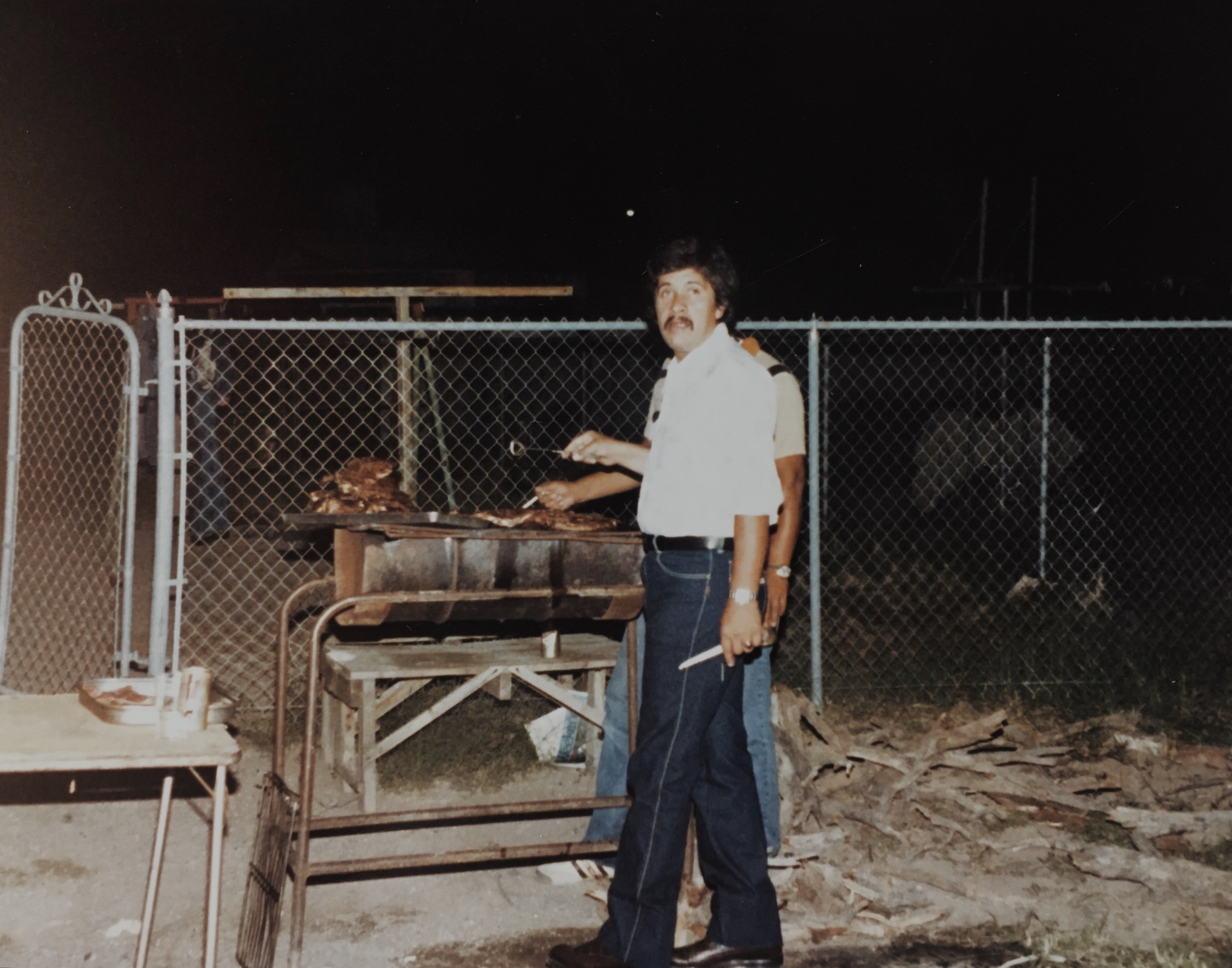
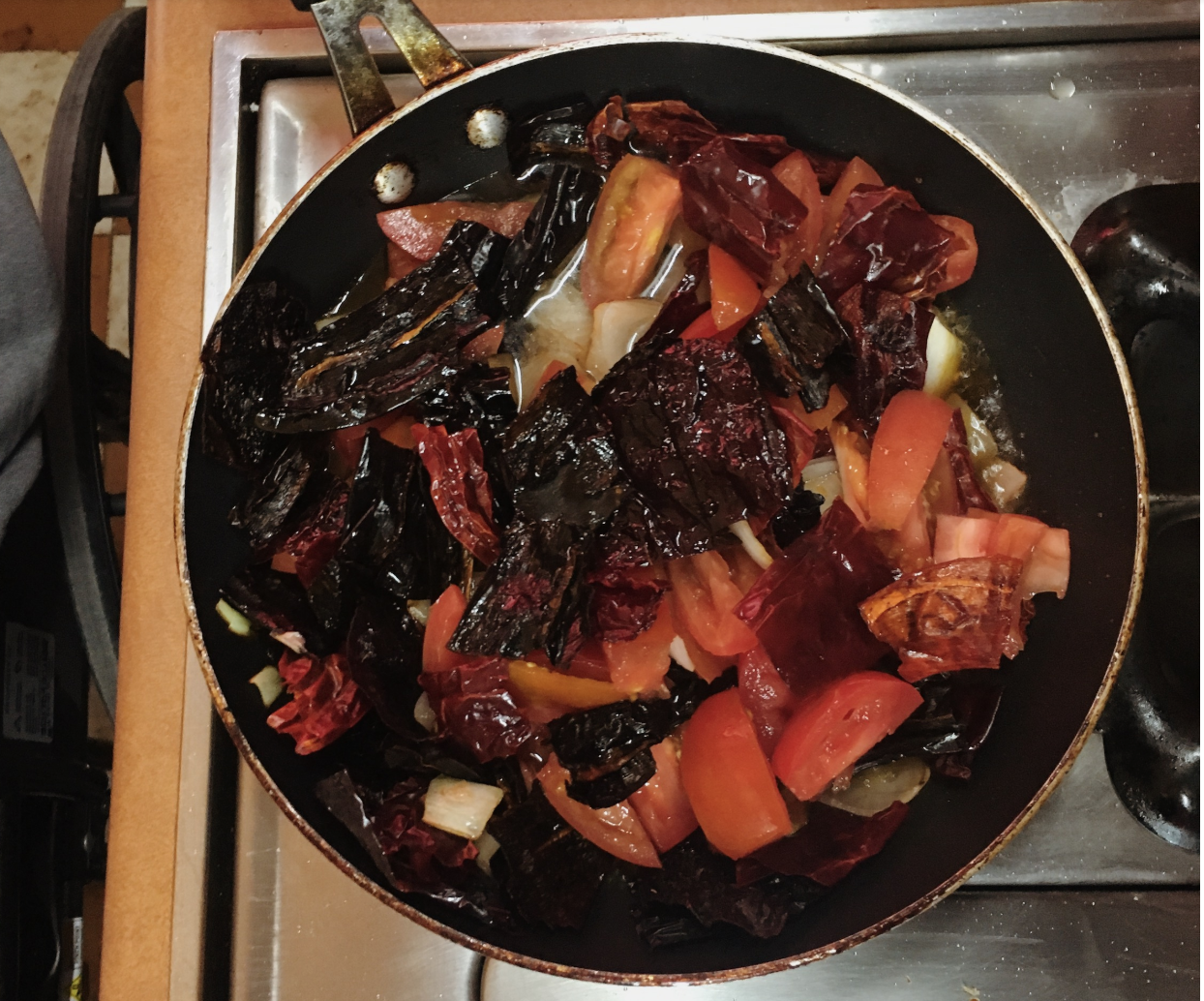
On this occasion, Don Miguel taught me how to prepare “pescado a la talla,” a traditional fish dish from the Mexican coastal state Guerrero. As soon as I arrived at Sagrario’s house, I was immediately put to work. Don Miguel ordered me to chop the garlic, onion, and tomatoes that we’d use to make the “adobada,” or marinade, to pour over the fish.

As I was standing over the stove stirring our marinade, I was startled when Don Miguel yelled at me from his wheelchair. “Qué haces niña? Con fuerza!” What are you doing, girl? Stir it harder!” Apparently, he didn’t like my technique. “Hay que hacerlo con amor!” I told him, with a nervous laugh. You have to do it with love. Which for me, meant moving slowly and with care. “Sale muy caro tu amor,” he shot back. Your love is very expensive. He complained that at my speed, we’d be in the kitchen all day. And we were. We spent over four hours making the fish and other side dishes. We had a beer, listened to Freddy Fender and Johnny Cash, and talked food all day long.
When we finally sat to eat, Don Miguel could only handle a few bites. After all that effort and work, he couldn’t even enjoy our delicious creation. He had little strength and not much of an appetite due to his ailing health. After the meal, Sagrario thanked me for spending time with her dad because she was sure it had gotten him out of bed that day. She said he was content just to teach me to cook and to watch me eat. I saw this joy on his face, which is why I stuffed myself in an effort to please him. And why I had “mal de puerco,” a food coma, for days.

A few weeks after our cooking date, Don Miguel passed away. His passing came within just a few days of the anniversary of my grandfather Tom Garcia’s death, which meant he was also on my mind at this time. I cherish the time I spent in the kitchen with Don Miguel, my adopted Mexican grandfather. He reminded me so much of my grandpa Tom, who also loved food. Both of these “abuelos,” or grandfathers, loved cooking and eating more than anyone I know. I lived with my grandpa Tom during the last seven months of his life. I remember how he’d wake up to make huge breakfasts in his kitchen: eggs, potatoes, bacon, and pancakes. When I’d come home from work, we’d grill in the backyard for dinner. So many of my memories of my grandpa Tom revolve around food.
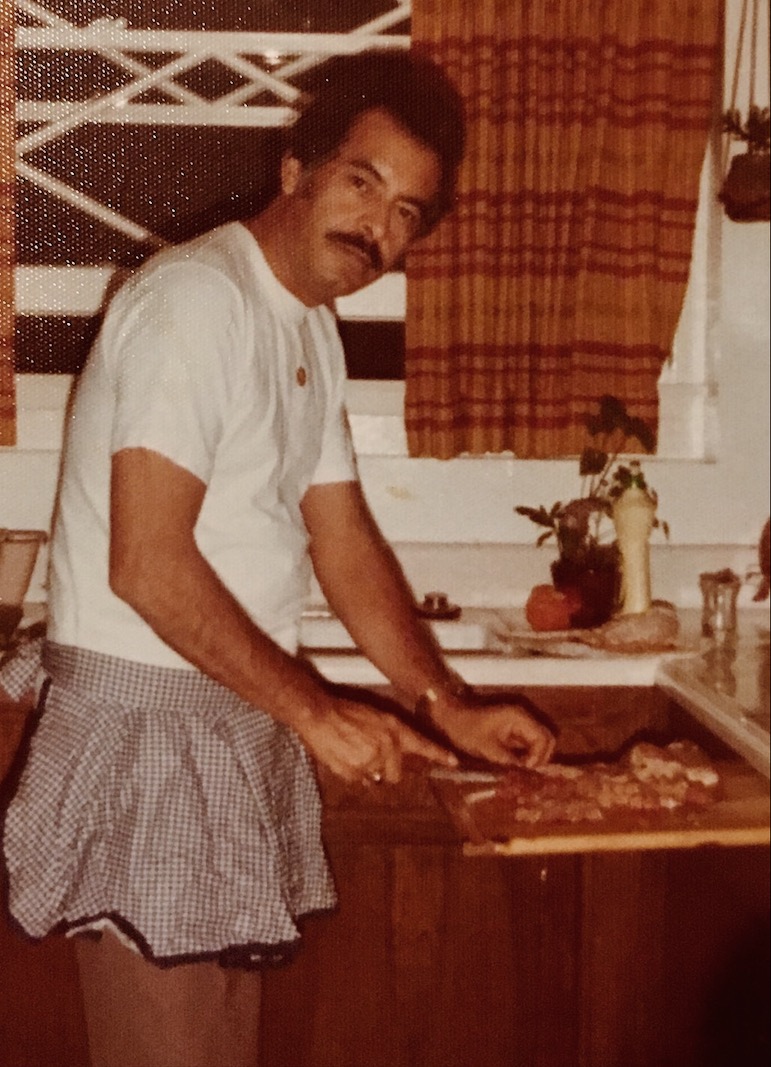
It’s no surprise that both of these men gravitated towards food in their last days. Food is one of the biggest pleasures in life. Don Miguel would sneak out to the “mercados,” open-air markets, with his caretaker, Sergio. They’d go eat tacos, menudo, birria, barbacoa. Sometimes, Sergio would tattle to the family about what Don Miguel had been eating. “Sé hombre, no payaso,” he’d tell Sergio on these occasions. Be a man, not a clown. My family also nagged my grandpa Tom about his diet. He ate donuts every day, and had a weakness for In-n-Out burgers. Whenever we got on his case, my grandpa Tom would remind us “I can’t smoke anymore. I can’t drink anymore. I need some kind of guilty pleasure in my life!”

All they wanted was to live their last days “como se les dio la pinche gana,” however they damn well pleased. My grandpa Tom wanted us to remember him by the words “He may not have lived as long as he wanted, but he did what he wanted as long as he lived.” Don Miguel and my grandpa Tom both lived and died by this mantra. I hope they are together somewhere eating tacos and listening to mariachis.

 Melissa Montalvo
Leave a comment