Mezonte. My all-time favorite mezcal brand. It means “heart of cooked agave.” I first tried Mezonte mezcal in 2015 at Pare de Sufrir, a no-frills mezcalería in Guadalajara. As soon as you enter, you see a number of images covering the wall behind the bar. They show the faces of men, young and old, weather-skinned, and usually in cowboy hats. These are the men that produce Mezonte mezcal.

Mezonte is a non-profit organization dedicated to the preservation of traditionally-made agave spirits. The organization primarily works with producers from the states of Jalisco and Michoacán and helps them reach a larger market to sell their mezcal. Both Pare de Sufrir and Mezonte are the creations of Pedro Jiménez, a man on a mission to educate consumers about the tradition, culture, and biodiversity behind these agave spirits.
As a regular at Pare de Sufrir, I’ve grown fond of seeing the producers’ faces. I often wonder about their stories; where they are from, what they are like, and how they got into mezcal production. So when Mezonte announced that they were hosting a “Mezontour,” a visit with one of their partner mezcal producers, I joined the expedition.
On May 18th, a group of 15 mezcal nerds crammed into a small van to make the five-hour trek to visit maestro mezcalero, Don Rosario “Chayo” Pineda. Don Chayo is a master mezcal maker from Tetapán, a small town with breath-taking views of the Colima volcano. On our drive into town, Pedro’s wife and co-tour leader, Monica, proudly explained that the Pineda family preserves traditional methods of mezcal production and takes great care of the local agave species. As a result, Don Chayo’s mezcal is known as the best in the community.

Depending on the species, agave can take anywhere from five to 30 years to reach maturity and be ready for harvest. Because of this time-intensive process, the financial return for producers also takes years. Don Chayo’s agave plants were years from being mezcal-ready. “We wanted to give Don Chayo other opportunities [to earn money] through tourism,” explained Monica. “Para que no se desanima.” “So he’s not discouraged” to give up his mezcal production.
When we arrived at Don Chayo’s home, he immediately offered us a variety of ponches de mezcal. This alcoholic punch mixed local fruits with mezcal. We tried ponche de tamarindo (tamarind), guayabilla (a type of small guava), granada (pomegranate), and ciruela (plum). Pedro and Don Chayo warned us not to drink too much since the ponche was just a quick pick-me-up for our walking tour under the scorching sun. Eager to try all the flavors, we ignored this suggestion.
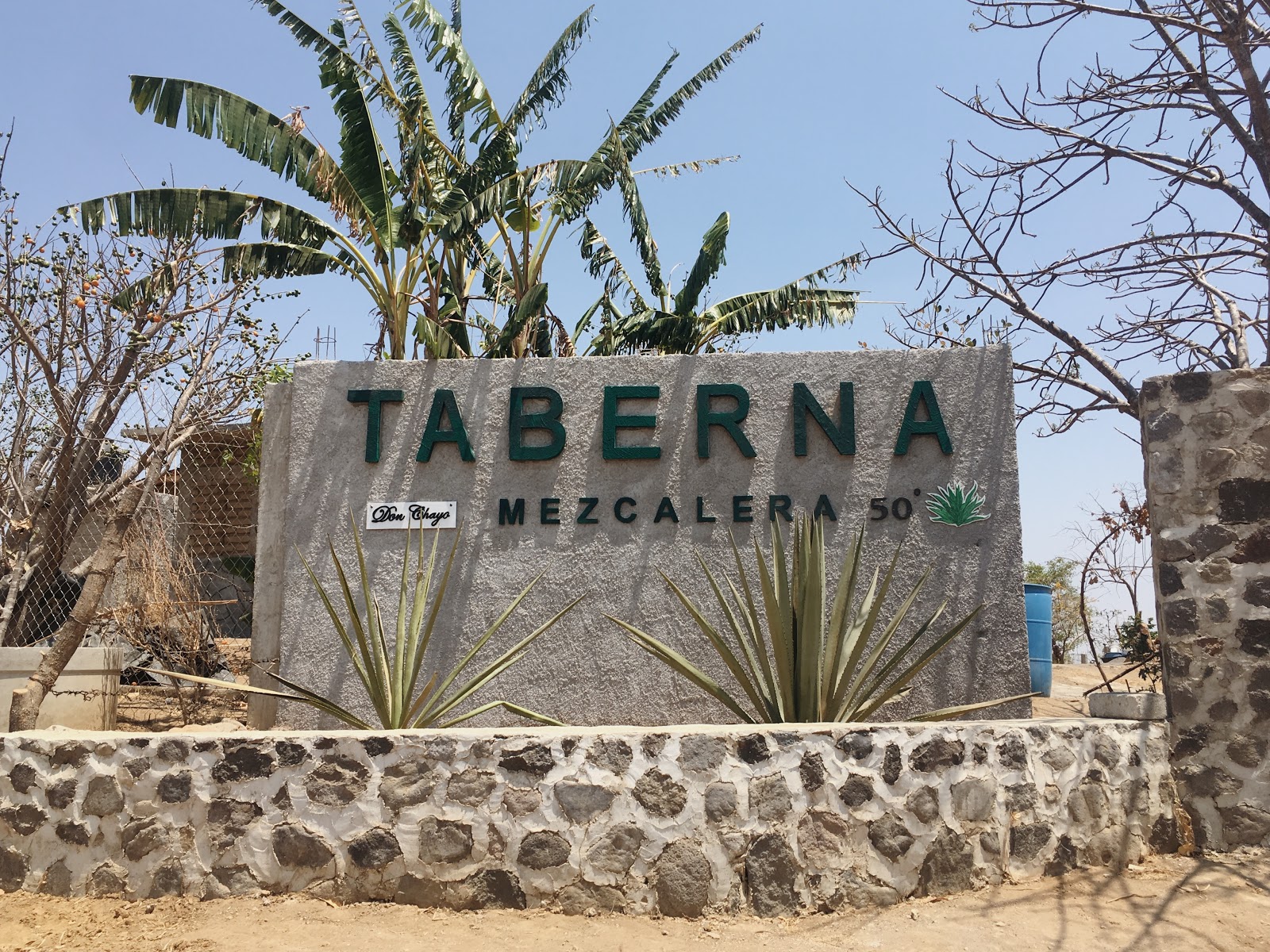
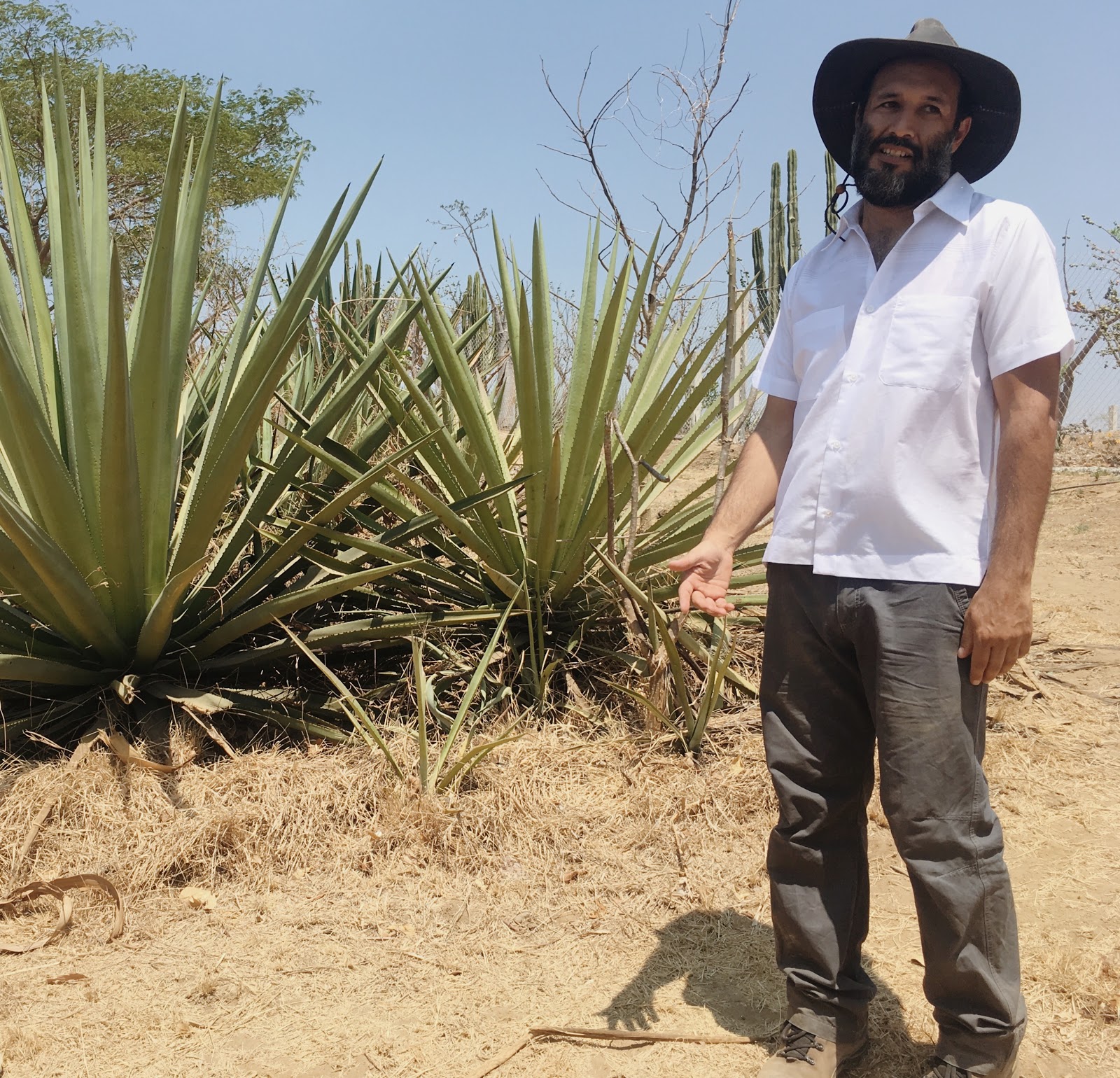
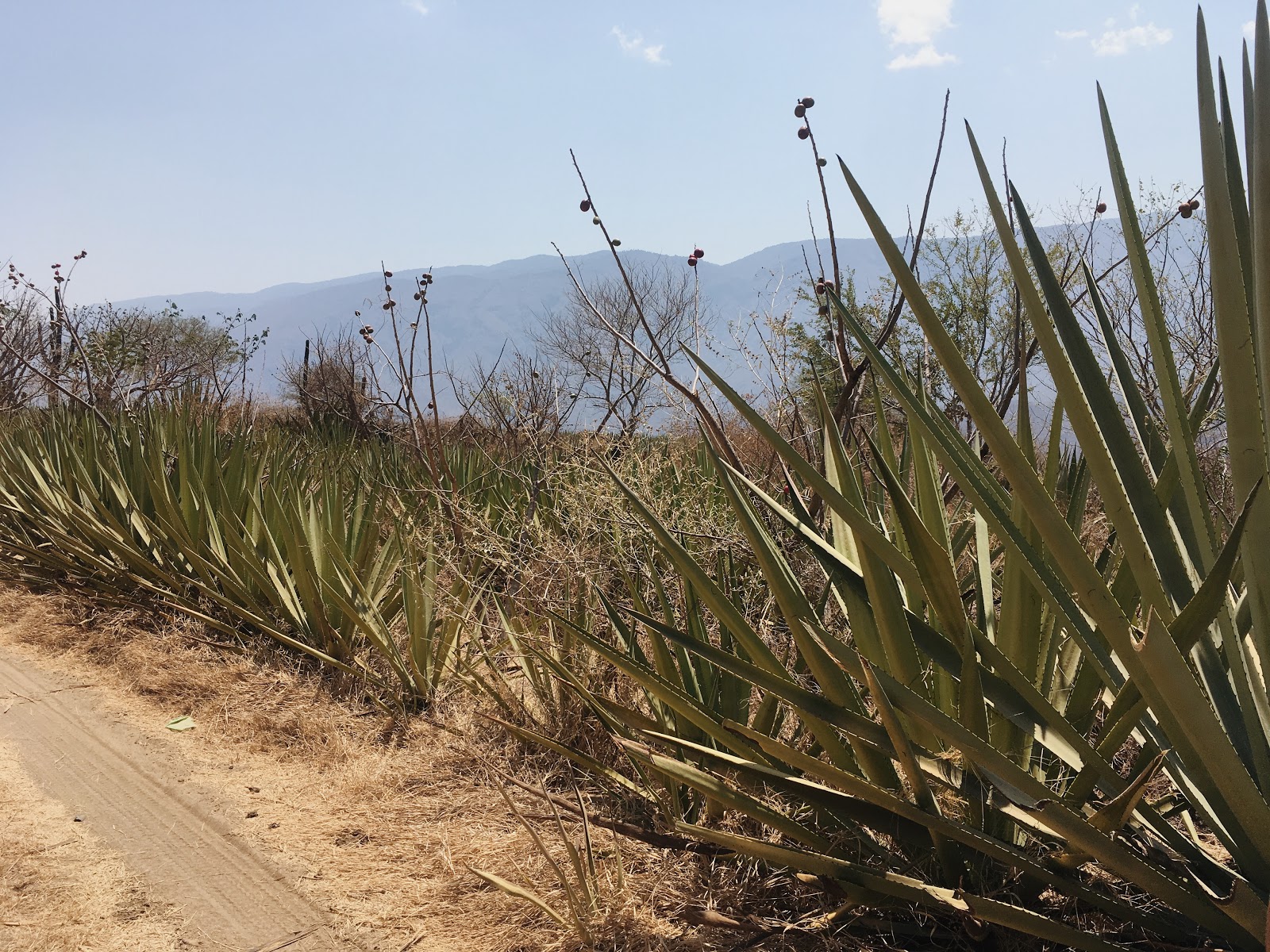
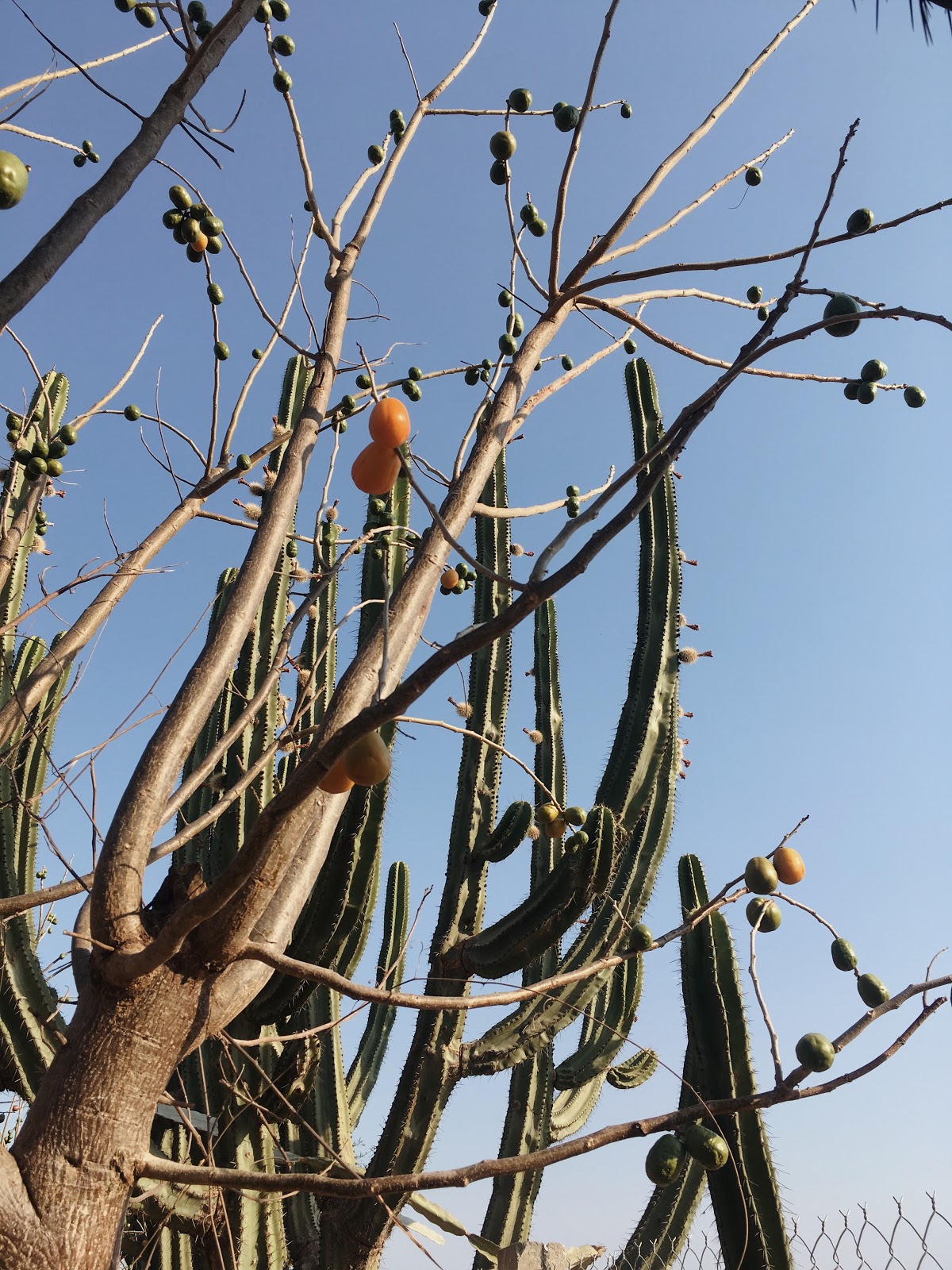
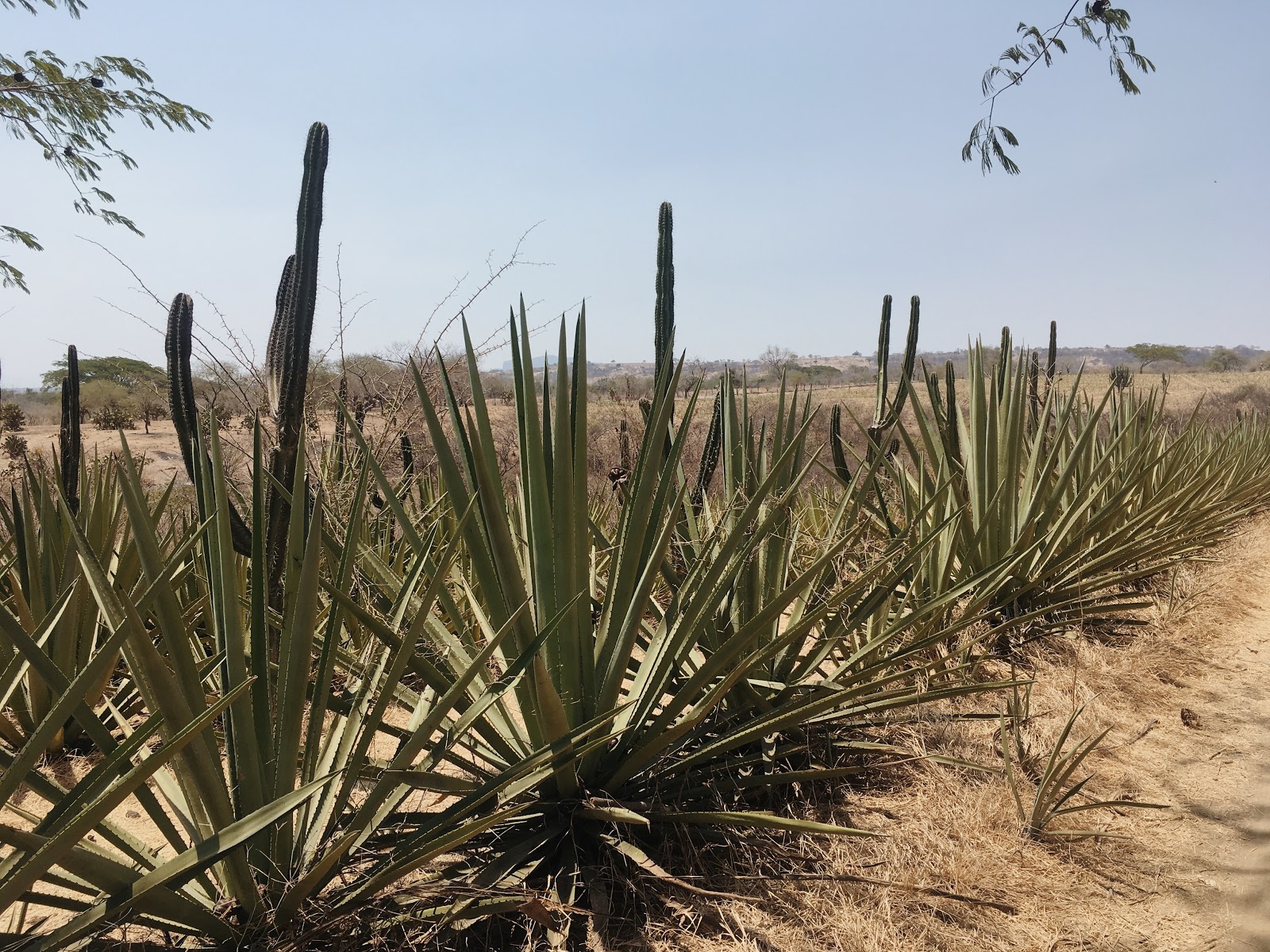
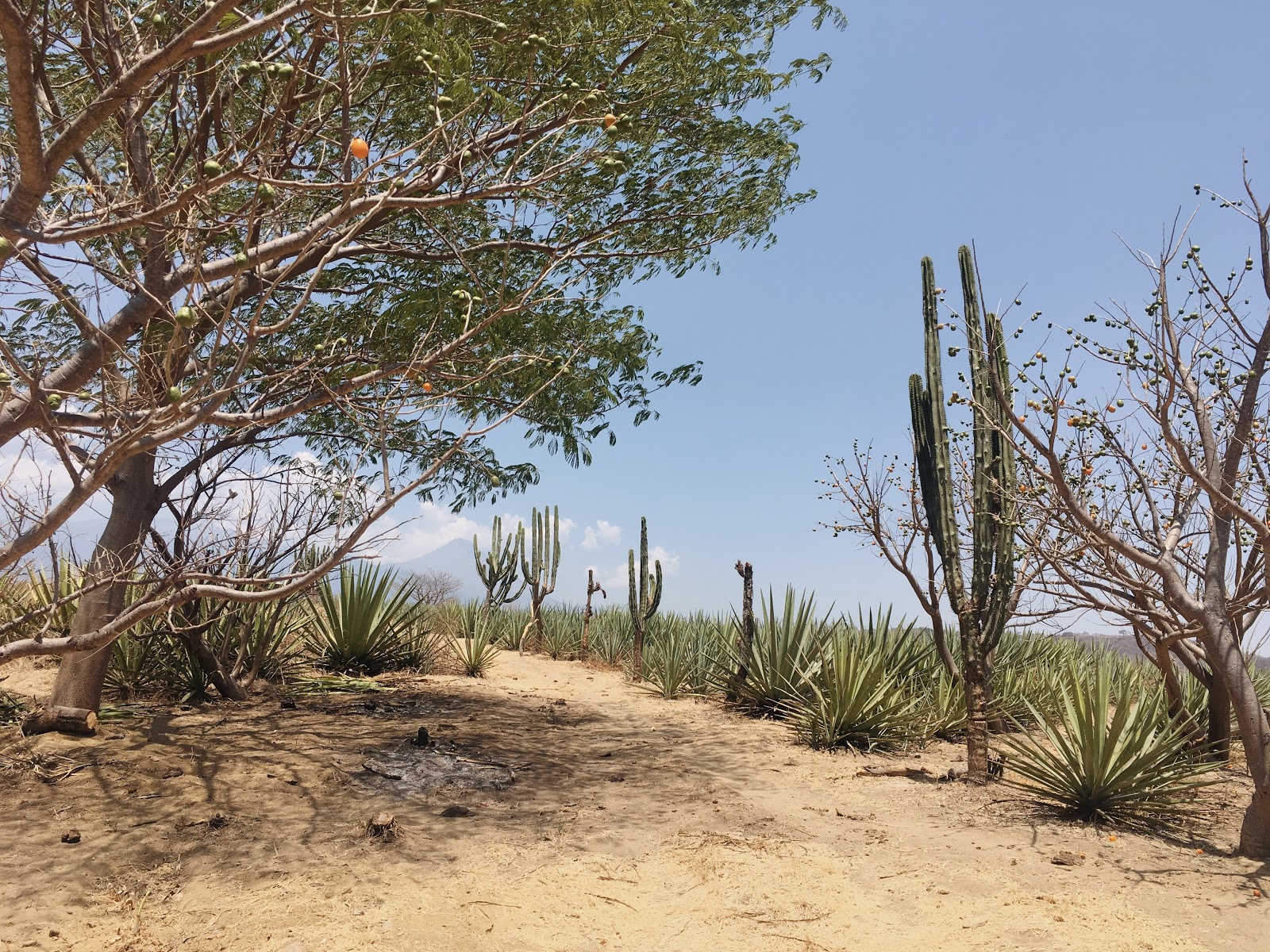
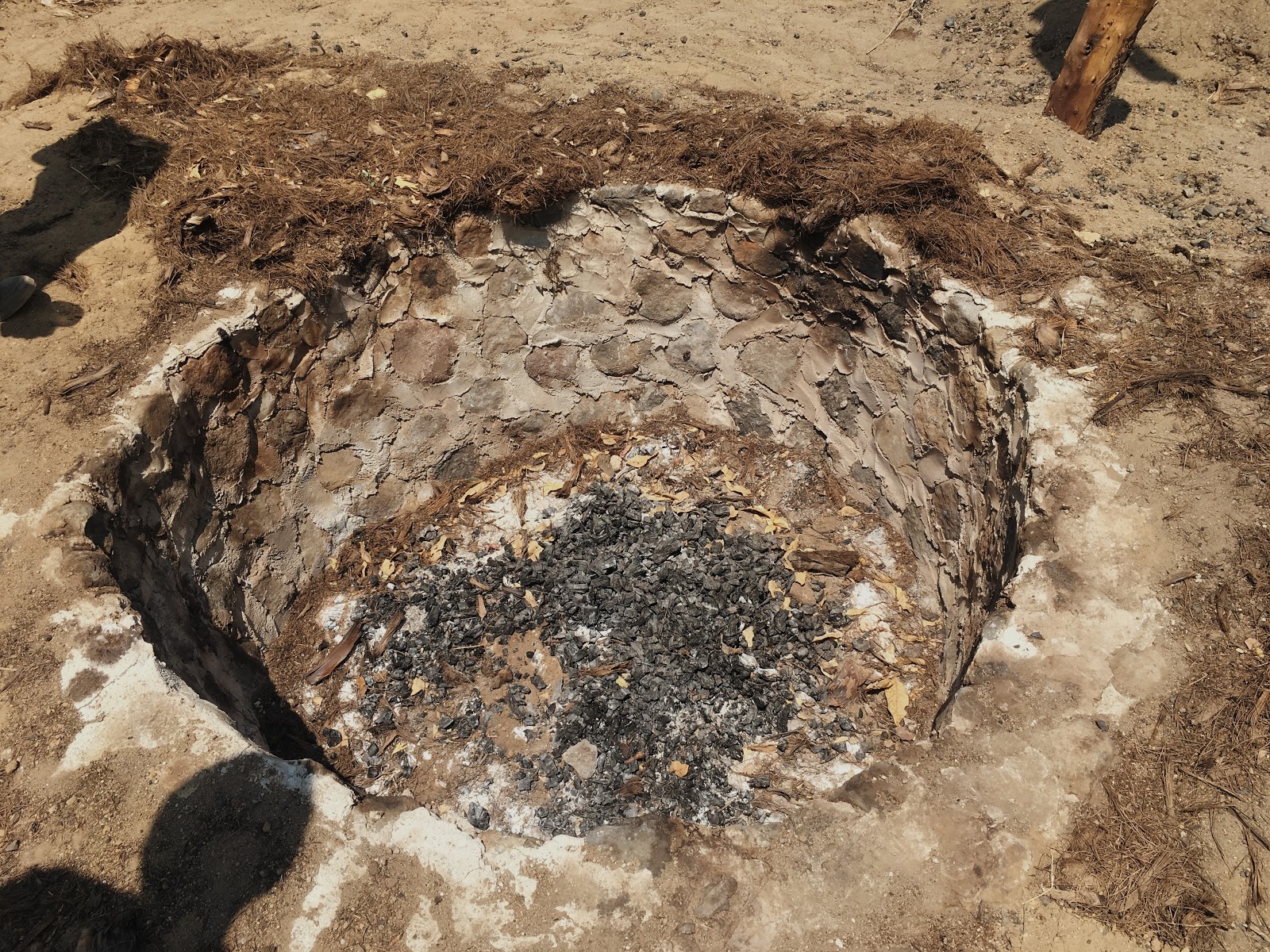
After a quick visit of an ancestral rock important to Don Chayo’s family, we arrived at Don Chayo’s taberna (tavern), where he makes the mezcal. His taberna sits on top of a vast, windy canyon, or barranca. Then, Pedro led the tour to the agave fields that surround the taberna. He explained how the local ecosystem of nopal cactus, ciruela trees, and the pollinating bats help the agave grow, which improves the mezcal’s quality.

Finally, we sat down for the highlight of the trip: a home-cooked meal with Don Chayo. His wife, Doña Guadalupe, and daughter-in-law had prepared us a mouth-watering lunch. We feasted on a meal of queso fresco, frijoles de la olla, crema del rancho, pipián con pollo, and tortas de semilla de parota, accompanied by handmade tortillas. I sat next to Don Chayo during the meal, who insisted I try the tortas and ordered his daughter-in-law to bring me a plate. Even though I had already stuffed myself to the brim with tortillas, beans, and pipián, I didn’t want to disappoint our gracious host. So I found the space in my stomach to eat the delicious tortas, wishing that I had the space to eat more of everything. This was the most memorable meal that I’ve had in Mexico as it is also my first home-made meal en el rancho.


After our meal, the mal de puerco (food coma) set in. As did the heat exhaustion from all the time we spent in the sun. We sat for hours chit-chatting with Don Chayo, in true convivencia. We asked about his different fruit trees, agave species, and his hometown of Tetapán. We drank agua frescas, ponche, and lots of mezcal. Don Chayo’s mezcal was fruity; it smelled and tasted like the cooked agave it came from. My favorite was an herbal mezcal made from four different types of agave. When we asked about these flavors, Pedro explained that a good mezcal should not taste only of smoke. Some industrial mezcal makers add a smokey flavor to mask a bad mezcal, he explained. Before we knew it, we had finished two bottles.
Mezonte operates by the philosophy of “the producer is first.” On the tour, it was clear that the organization truly lives out its values. Pedro insists that Mezonte’s relationships with their producers are more than business. He and his family have real friendships with producers like Don Chayo, whom he has known for over ten years.
Another important way they live out this philosophy is through fair payment to their producers and non-exclusive contracts. For example, most corporate tequila and mezcal brands lock producers into exclusive contracts. The companies buy the product at a fixed rate, which hurts producers since it doesn’t give them opportunities to look around for the best offer. Mezonte rejects this process. Instead, producers decide how much of their final product they want to sell to Mezonte.

As the sun set, we said our goodbyes to Don Chayo and his family with bottles of mezcal and ponche in hand. I spent a day with a maestro mezcalero. How many mezcal brands do this for their consumers? The people I have met in Mexico (especially people like Pedro Jimenez and Don Chayo) have inspired me to dig deeper into the culture, tradition, and ethics behind what I eat and drink.
For more on Mezonte, check out this video.
 Melissa Montalvo
Leave a comment