El invento del maíz por los mexicanos, sólo es comparable con el invento del fuego por el hombre.
The invention of corn by Mexicans is only comparable to the invention of fire by man.
– Octavio Paz
Living in Guadalajara, I’ve become obsessed with food. When you find tacos, tejuino (a sweet and tart fermented corn drink), tamales, and esquites (corn served with mayonnaise, cheese, chile, and lime), on what seems like every street corner, it’s an easy obsession to develop. And what do these foods have in common? Corn. Corn is everywhere in Mexico and is probably the most important staples of the Mexican diet. So when I found a tortilla making workshop last month, I immediately signed up.
On April 14th, I went down to the Fería de Productores, an artisanal market for local producers in the Chapalita neighborhood of Guadalajara. I was greeted by a tall, thin man with weathered skin, a straw hat, and faded jeans. This was Espiridión “El Paye” Fuentes Avilés, our instructor for the day. El Paye is a rural farmer who runs Los Alisos Ranch, an ecological farm dedicated to producing maíz criollo, local native corn.
We began the workshop with an introduction of the history of tortillas and their base of maíz. El Paye explained that Mesoamericans were the first to domesticate and harvest corn over 8,000 years ago. Today, there are 59 razas (types) of native corn in Mexico that are recognized by the Comisión de Biodiversidad. He passed around beautiful little vials of the different types of corn.

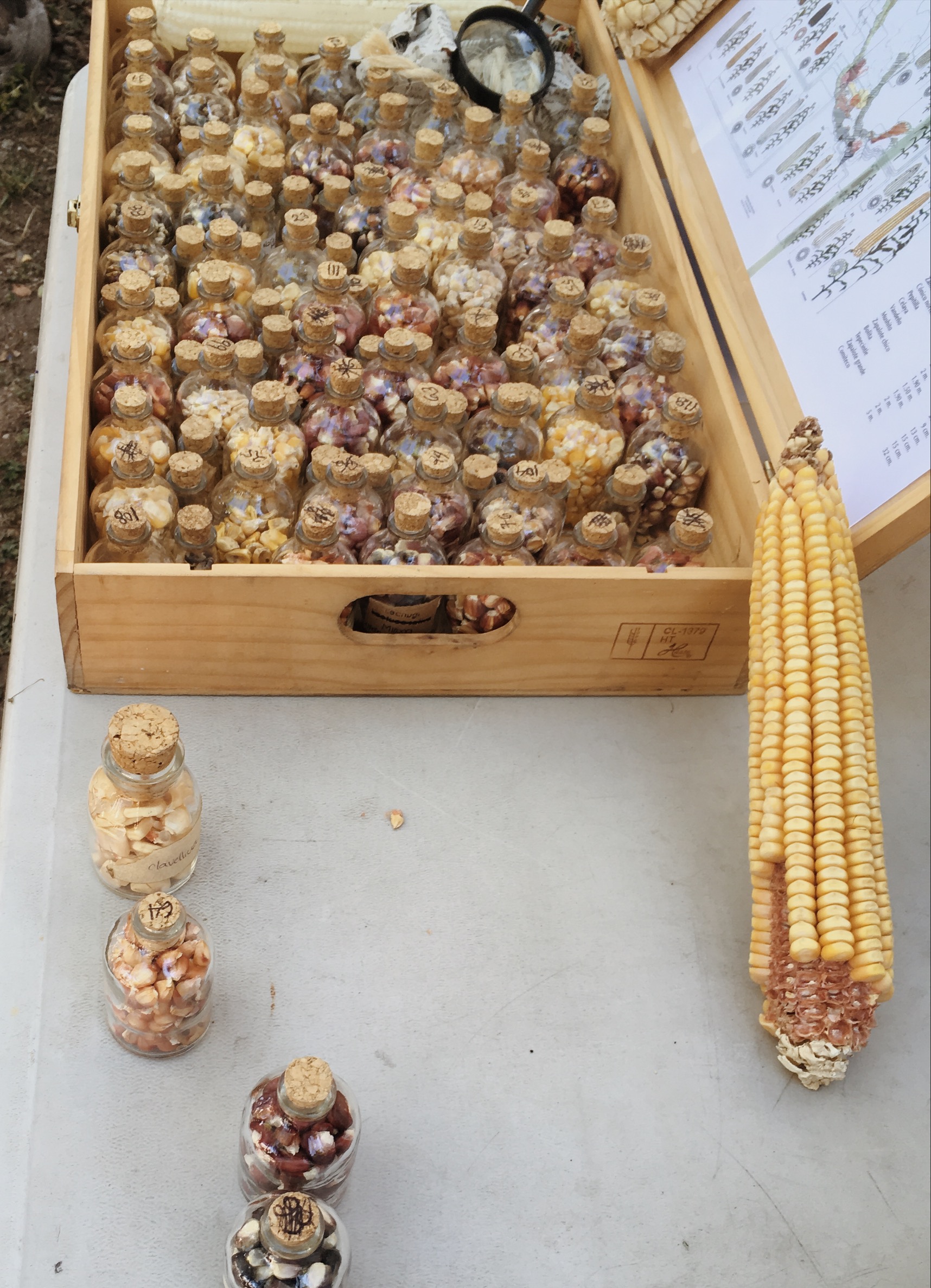
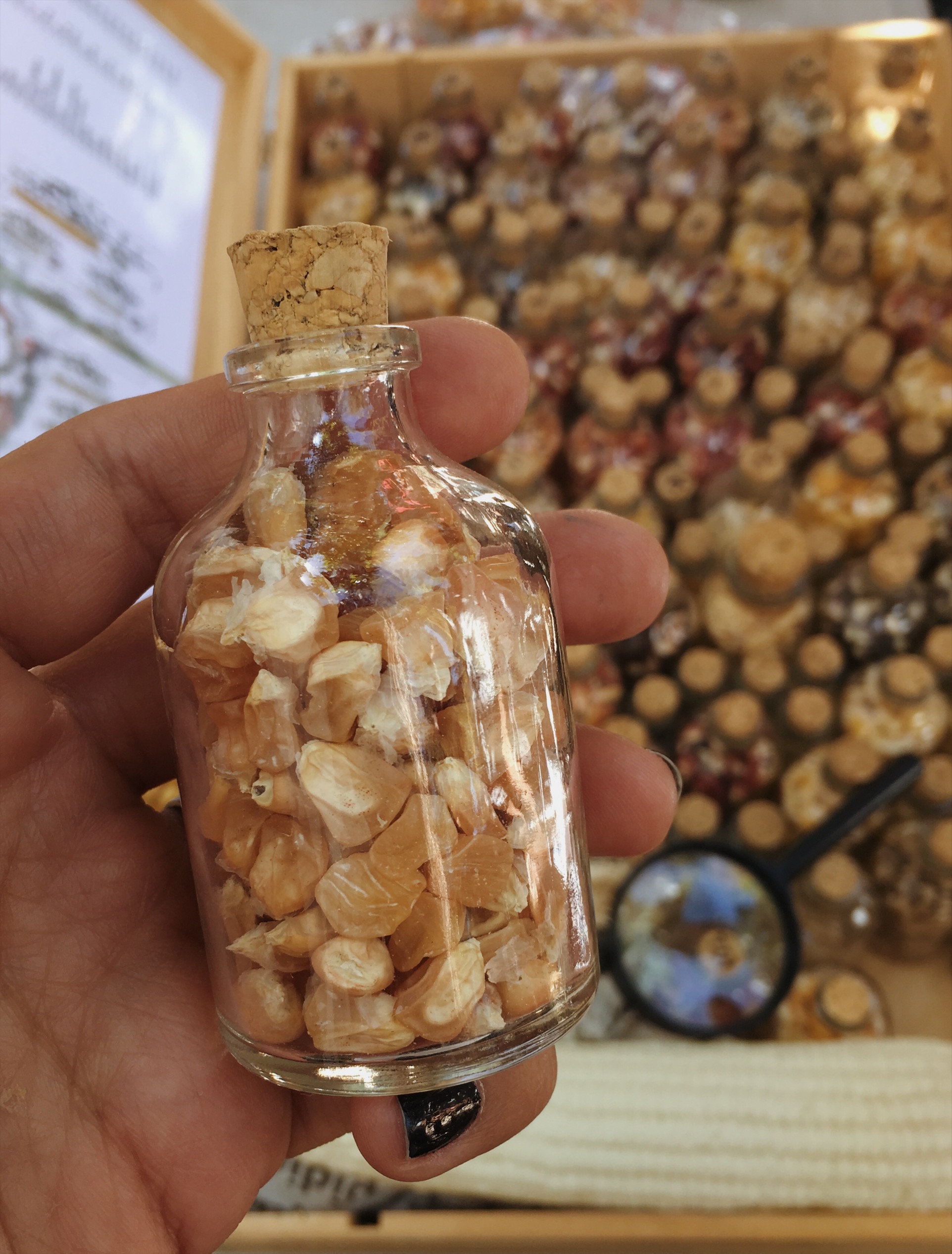

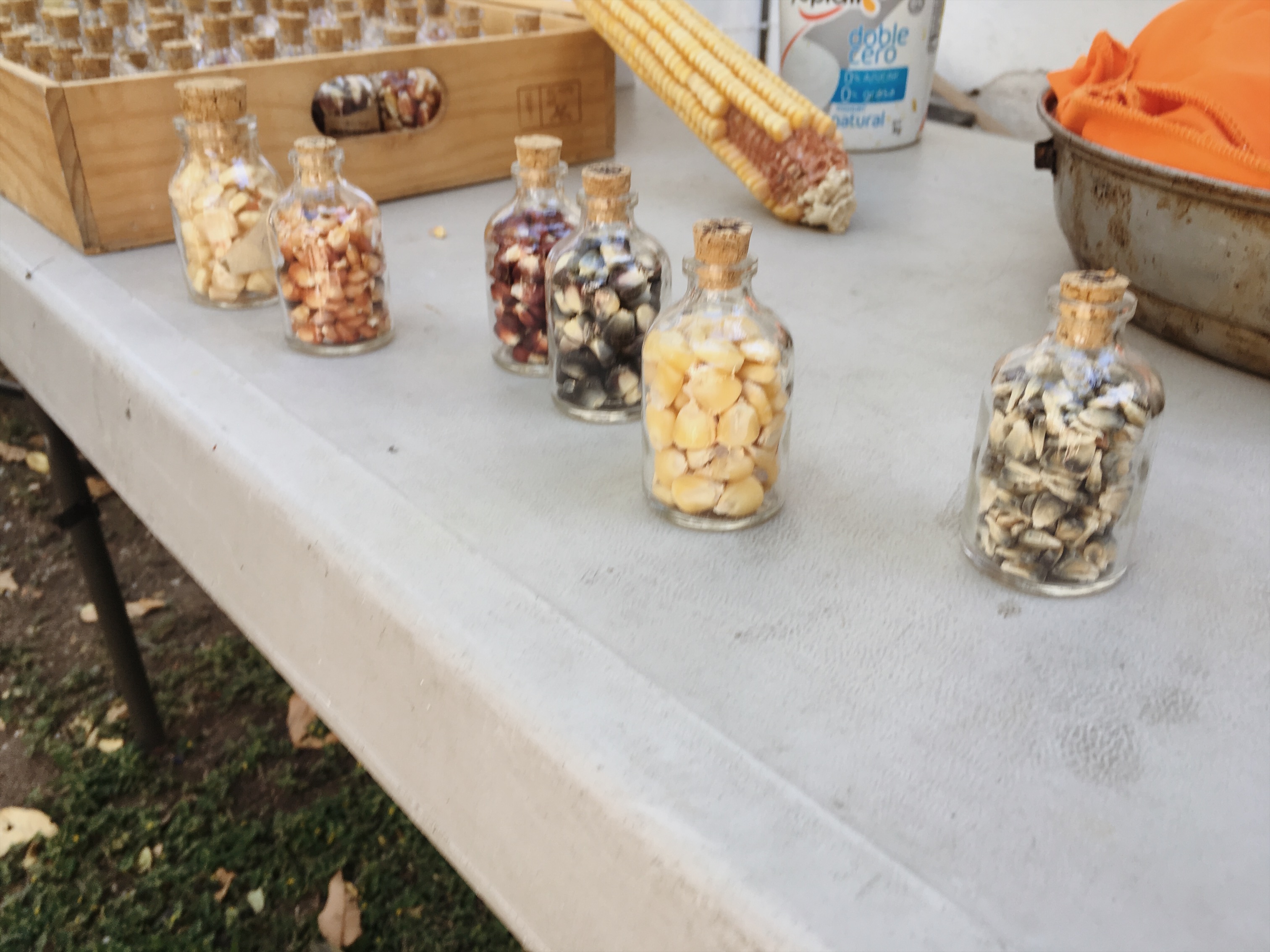
Next, El Paye explained the nixtamalization process, which brings out the corn’s nutrients and makes it edible. In this process, the corn is boiled with calcium hydroxide (also known as cal, or slaked lime). As El Paye rattled off his nixtamalization process, he was immediately bombarded with questions by the group. “How long should I boil the solution? When should you add the corn? What type of pot should I use?” El Paye did his best to answer everyone’s questions, clarifying that everyone does things a little differently. His final answer was: “tenemos que aprender a ver y sentir lo que estamos haciendo. Si no, no sabe rico.” “We have to learn how to see and feel what we’re doing. If not, it won’t taste good.”
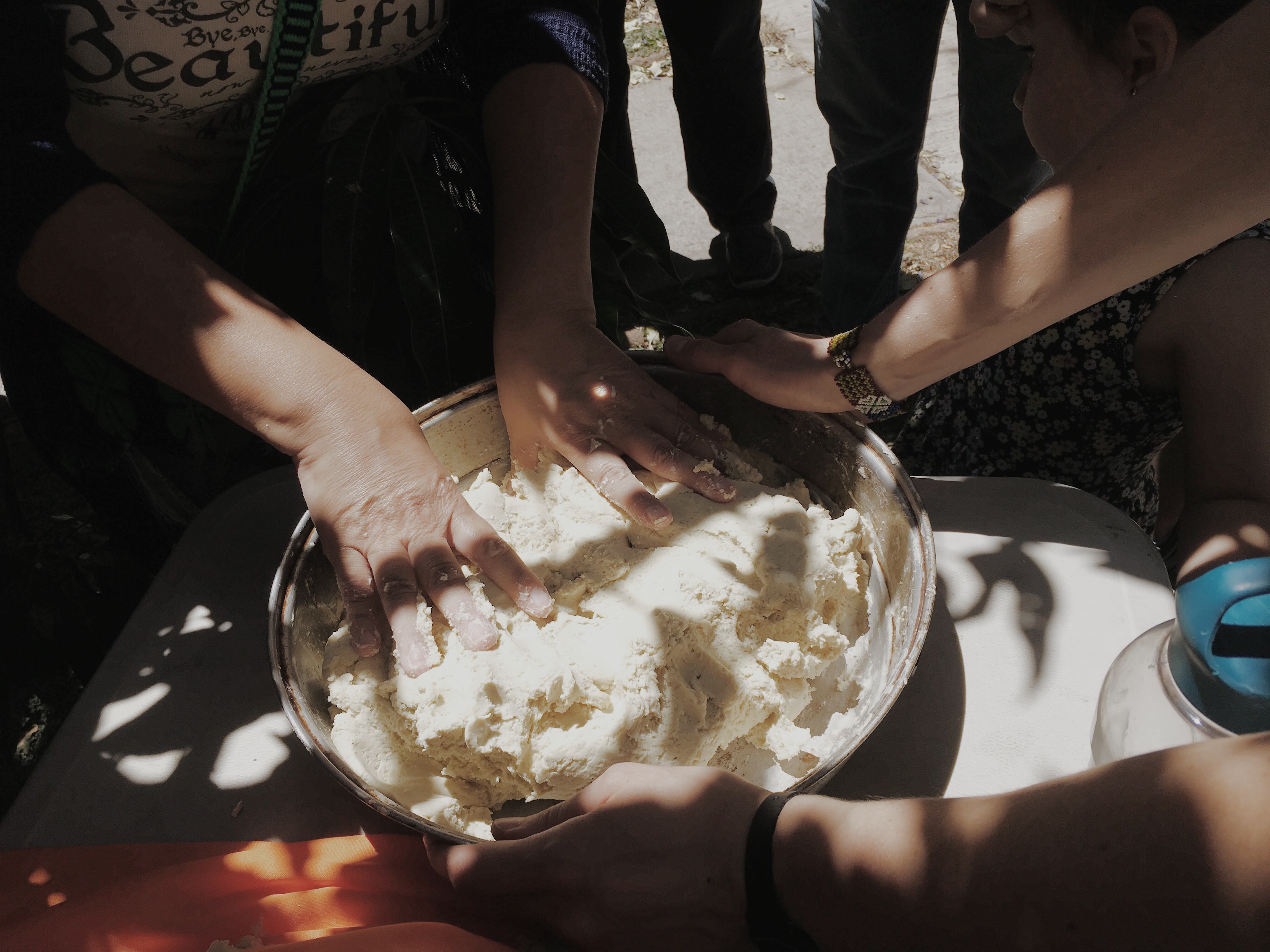
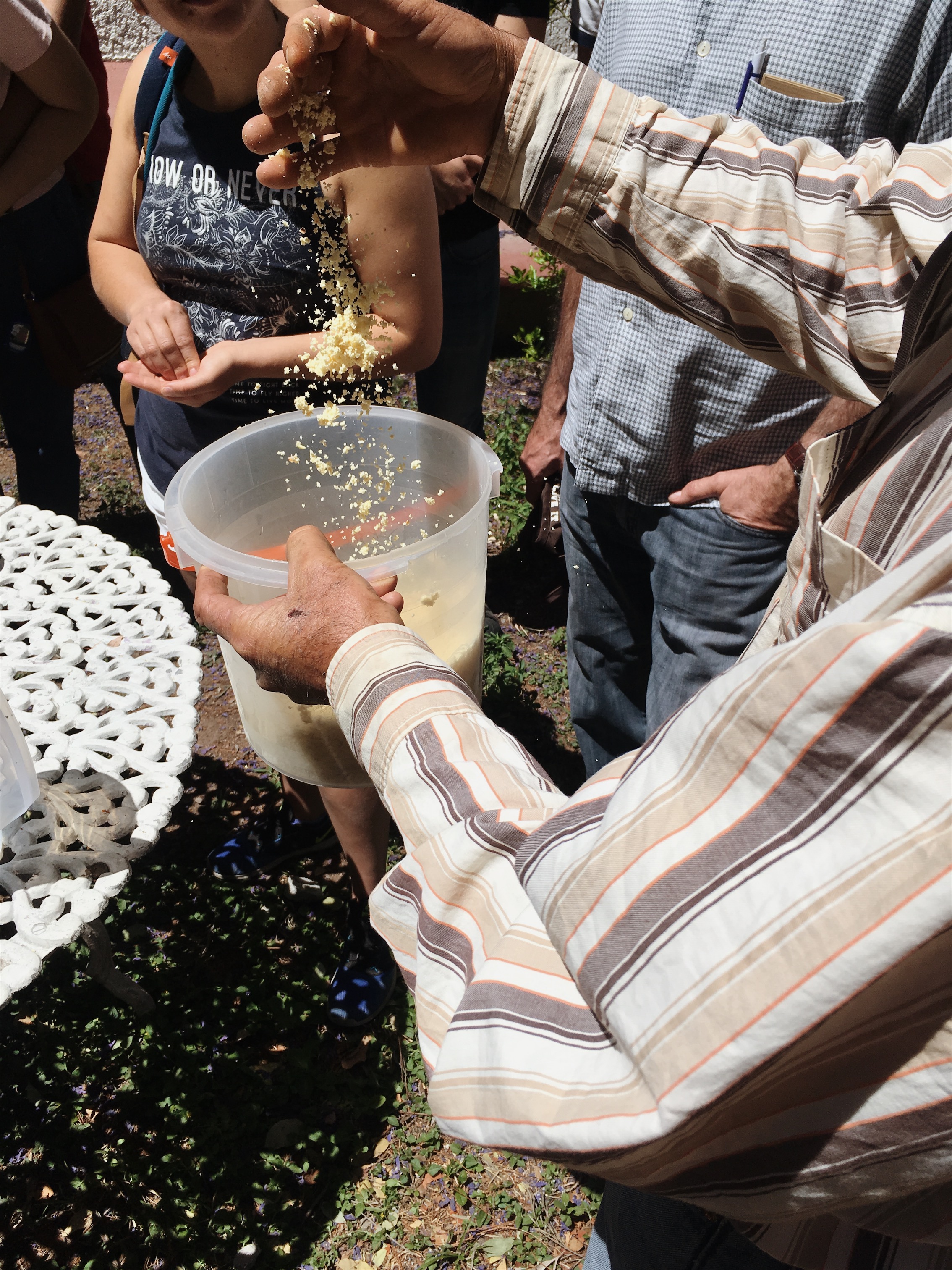
Then came the fun part: preparing the corn. El Paye called on volunteers to grind the corn. We all took turns with the hand grinder as well as using a metate, a pre-Hispanic stone tool used to grind grains and seeds. After grinding the corn, we added water to it to make masa, the corn dough used to make tortillas. As we took turns grabbing piles of the masa, El Paye showed us how to shape our tortillas by hand.

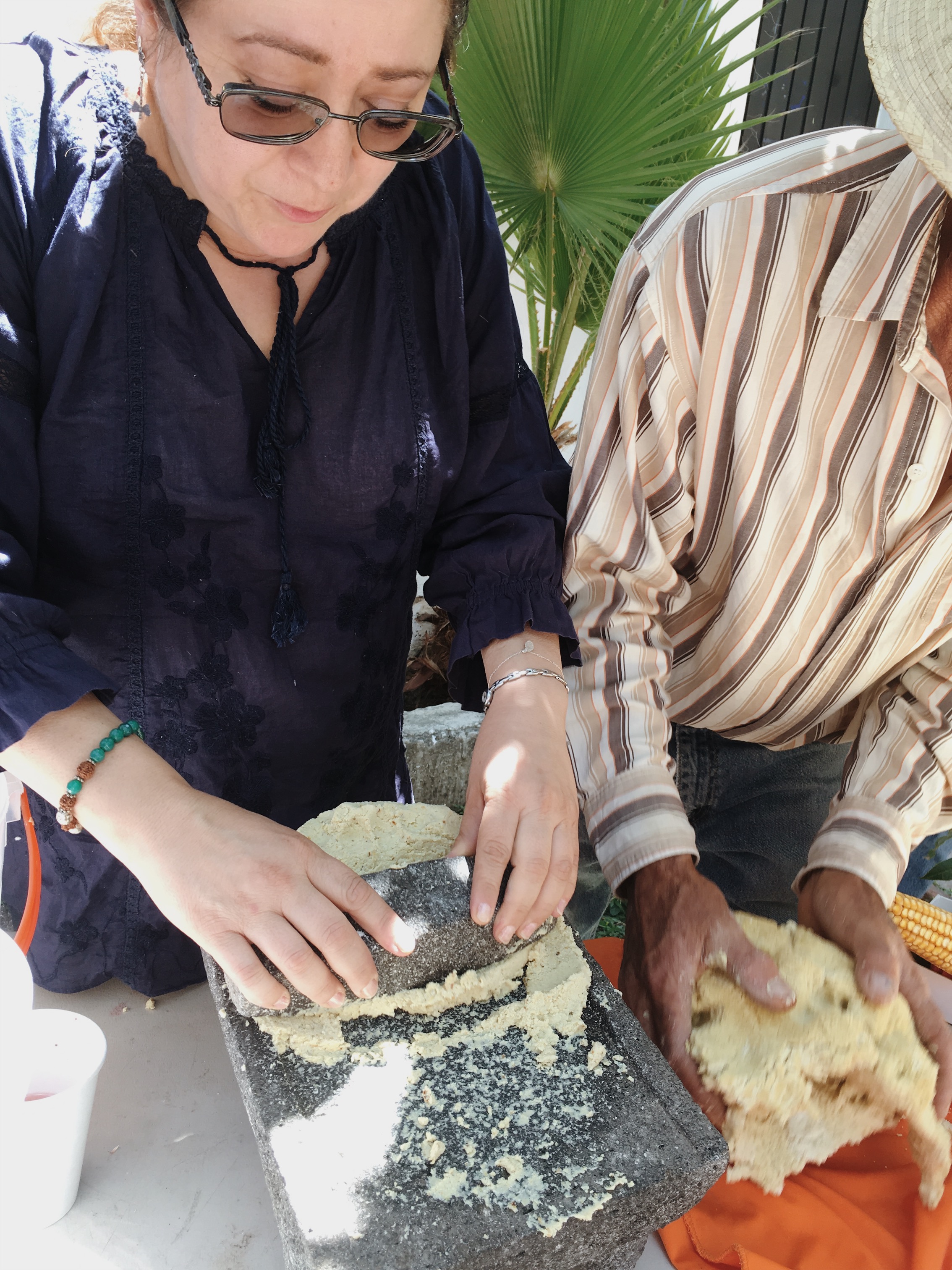
For those of us greener tortilla makers, he offered us a wooden tortilla press. As soon as I saw it, I instantly remembered my great-grandmother Carmen, who spent many years living in Mexico. When I was a little girl, she gifted me a little wooden tortilla press and we used it together once to make tortillas. Until this workshop, that was the only time that I had made tortillas by hand.
As we munched on our tortillas, someone asked about El Paye’s corn prices, and if the farmer’s themselves can afford their own corn. Since he makes an artisanal product with native corn seeds, it tends to be more expensive than the industrialized alternative. El Paye explained that the problem is not that the corn is too expensive. The problem is that farmers are grossly underpaid, making on average $70-$200 pesos per day ($3.50- $10 dollars per day). This isn’t enough for anything. We don’t need more production, he explained, we need better distribution and fair pay. “O me pagan, o no comen!” “You pay me, or you don’t eat!” he said.
El Paye acknowledged that part of the problem is that there’s an idea that farmers are pendejos, idiots. “Que somos burros que no valen nada.” That they are worthless mules. Yet farmers like El Paye have the most important job of all: feeding the world. These perceptions of farmers show that more than ever, we are disconnected from our food and the people that make our food. I had never spoken with a farmer until this workshop. And El Paye was more than a farmer. He was also a philosopher and historian. He led many thought-provoking conversations on genetically modified corn, the current politics of corn in Mexico, and the cultural and historical significance of corn (more blog posts on the way).
This workshop was a perfect example of how living in Mexico has changed my relationship with food. I can now see corn beyond its nutritional value to see how corn sustained a whole continent for millennia. I now understand that corn and other foods have much larger cultural, historical, political, and even spiritual dimensions. There’s a saying in Mexico that sums up this importance of corn to Mexico’s cultural identity: sin maíz, no hay país; Without corn, there is no country.

 Melissa Montalvo
Leave a reply to The book that changed the way I think about food. – Melissa Montalvo Cancel reply