First Visit to “El Bara”
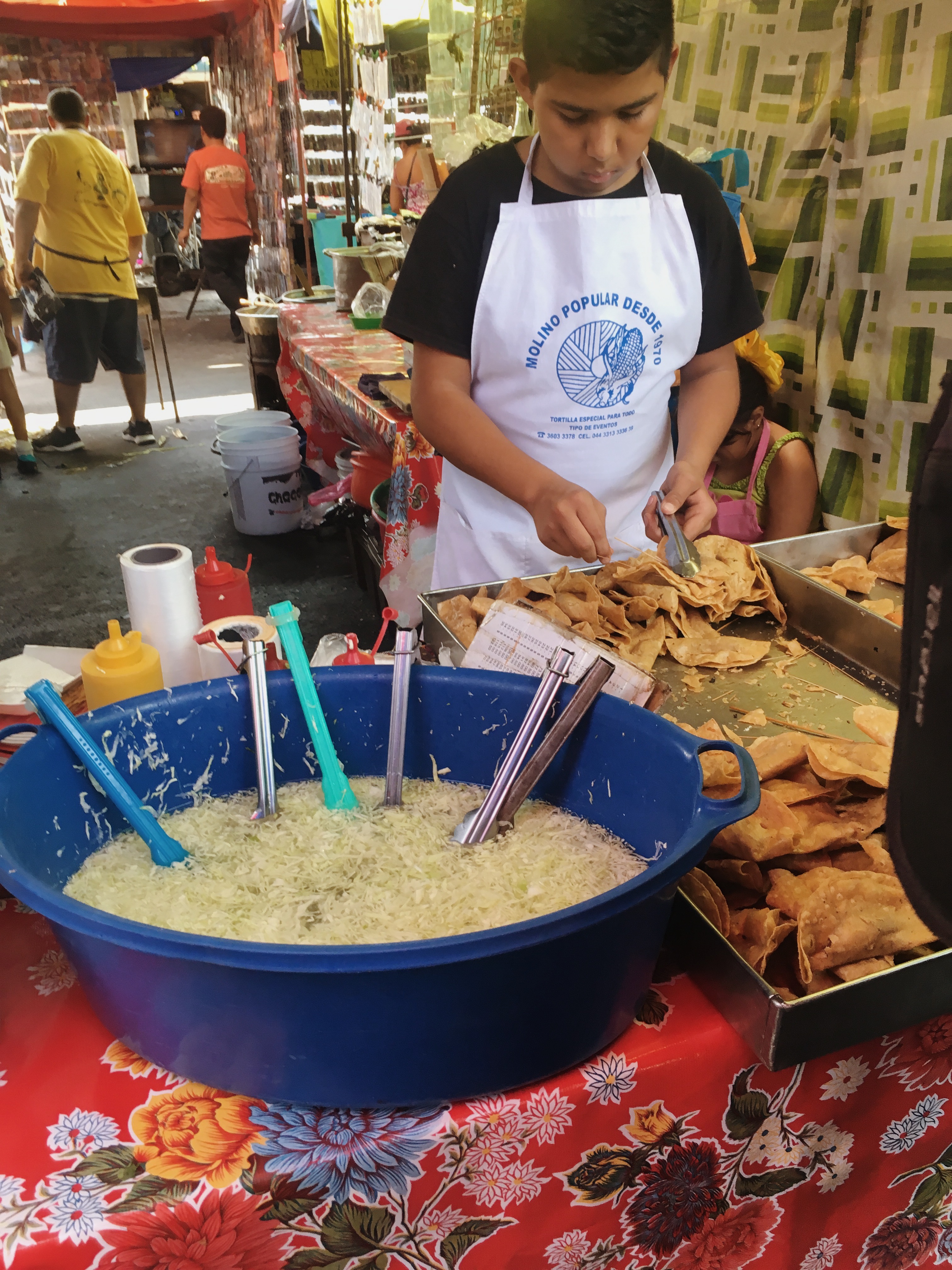
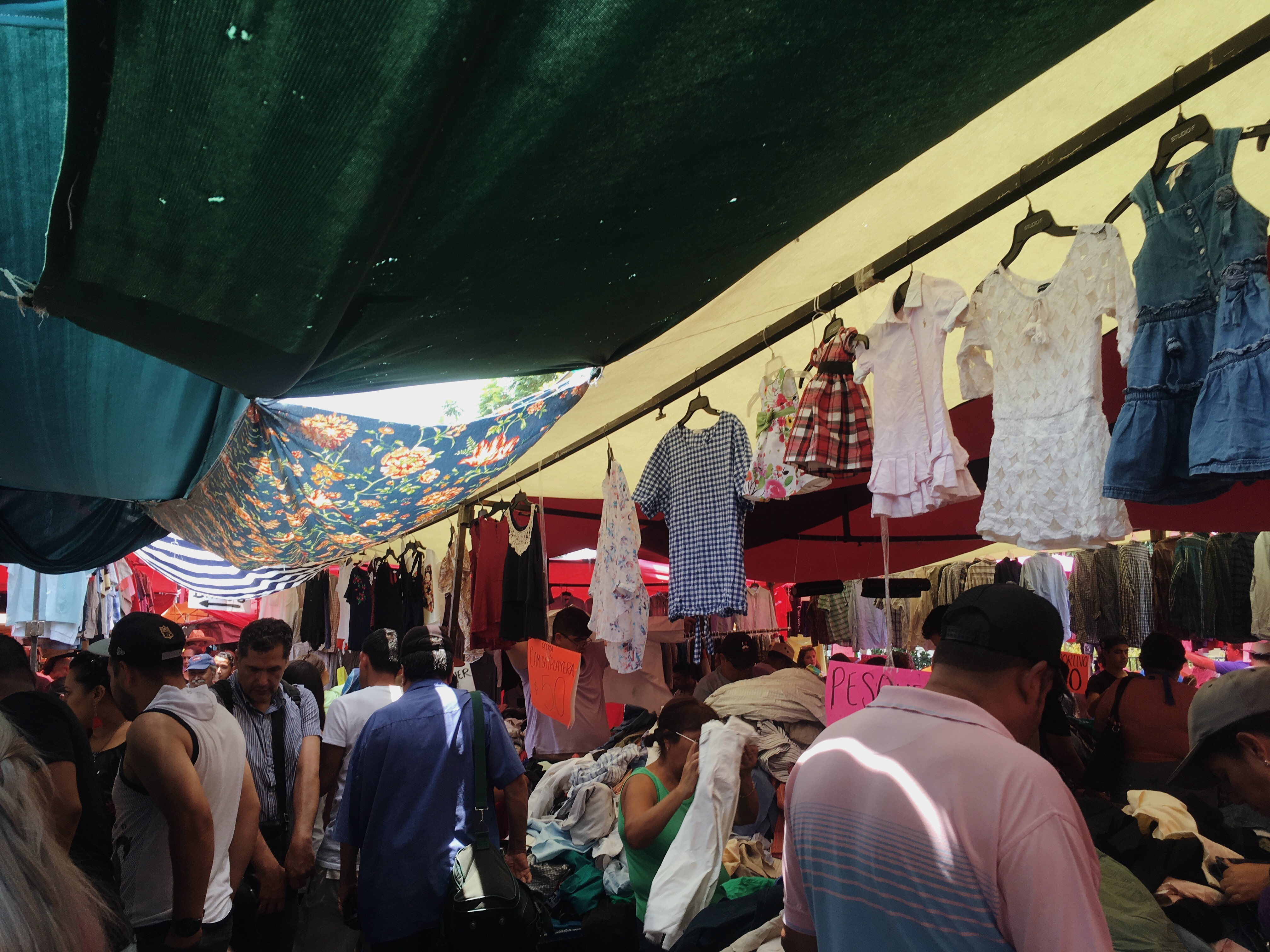
A few months ago, I went to El Baratillo market for the first time with my friends Frank and Saggy. We started our day at noon at the northmost end of the market, where a vendor was selling vintage photographs of Guadalajara’s center. We strolled down the main corridor, walking past stall after stall of knock-off Levis, tennis shoes, and sunglasses. We passed by mouthwatering tortas ahogadas (drowned sandwich), a local tapatío dish, tacos, and gorditas. On this particular Sunday, the market was overflowing with people. It was as if we were a school of fish swimming together.
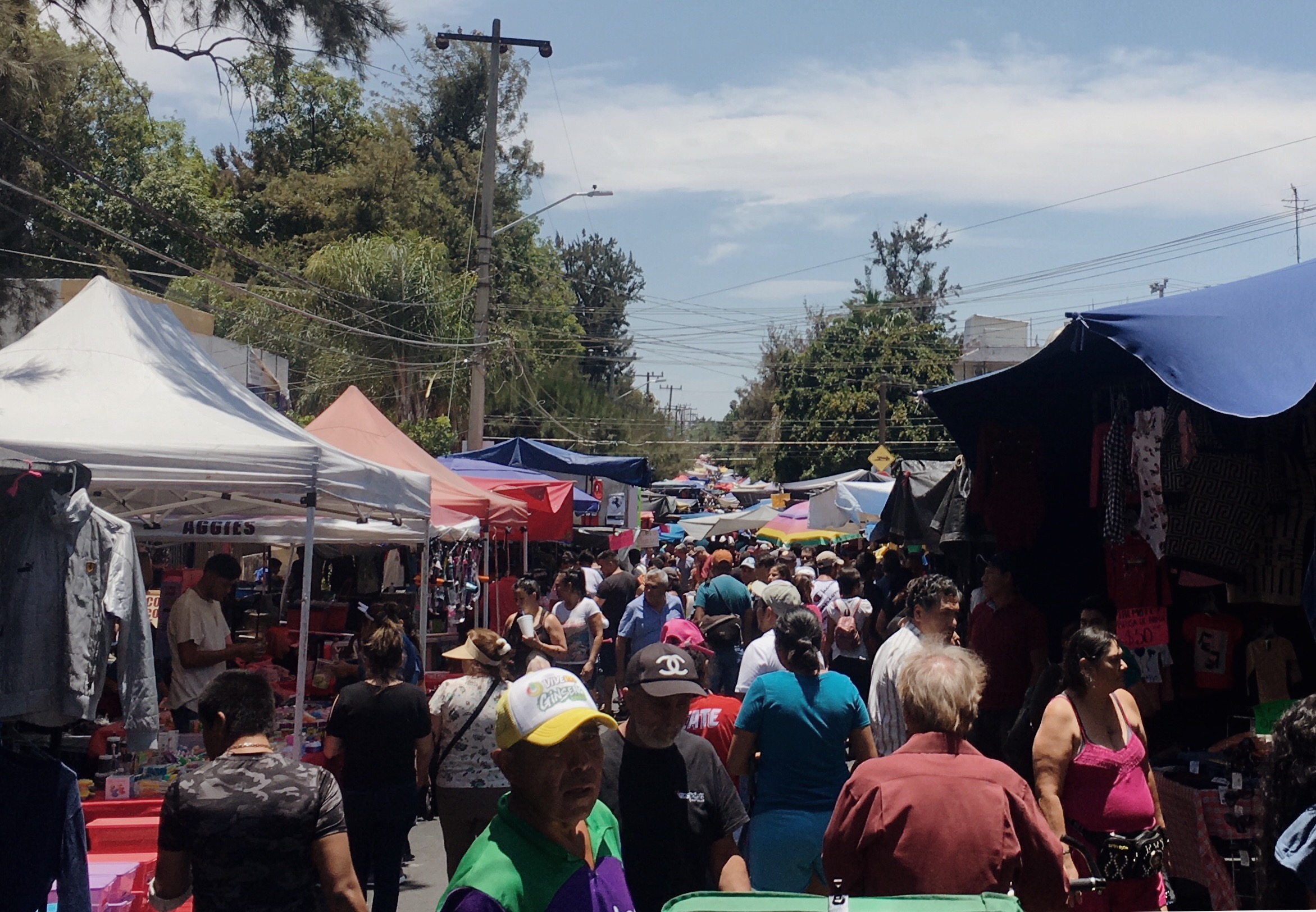
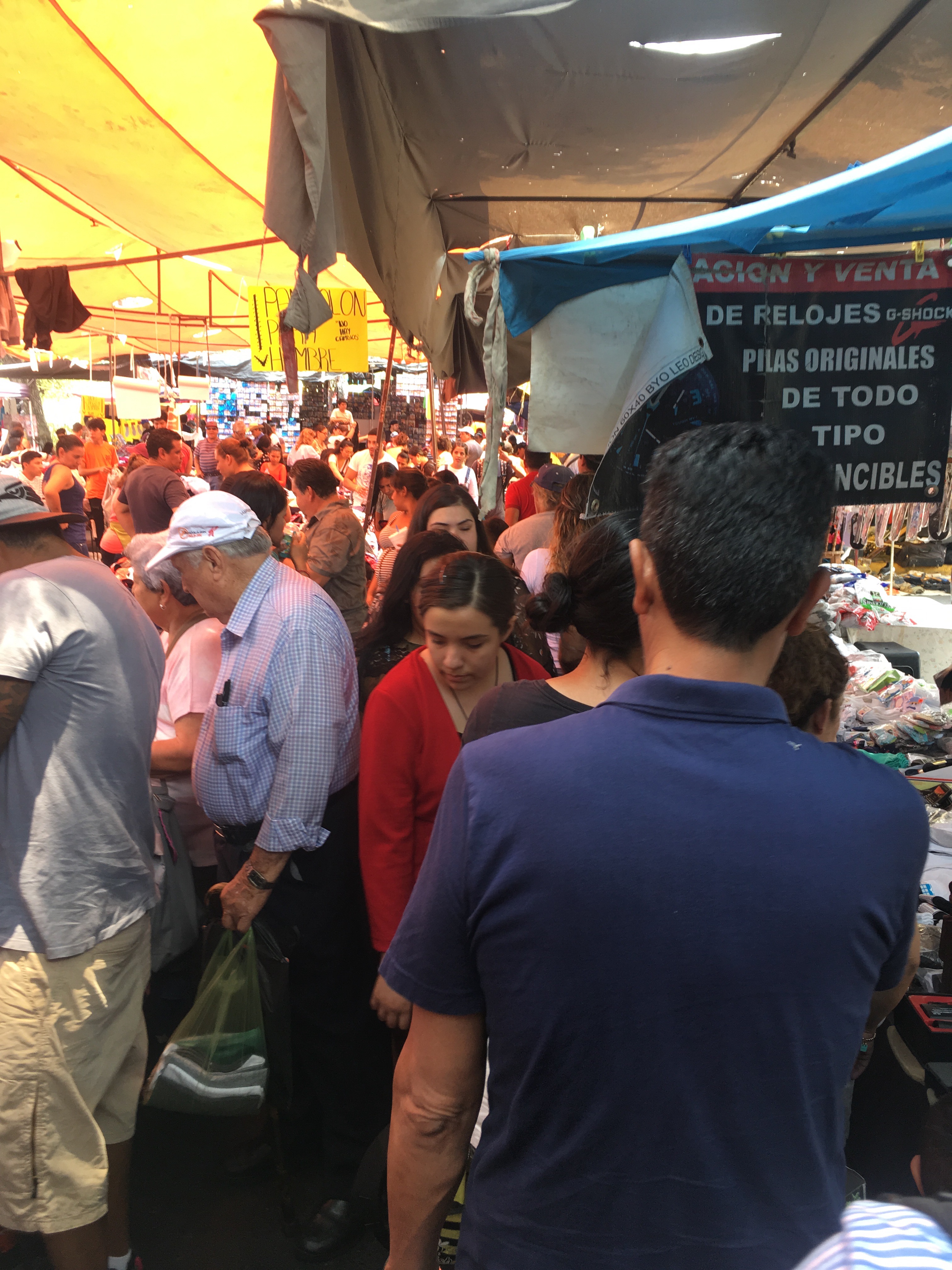
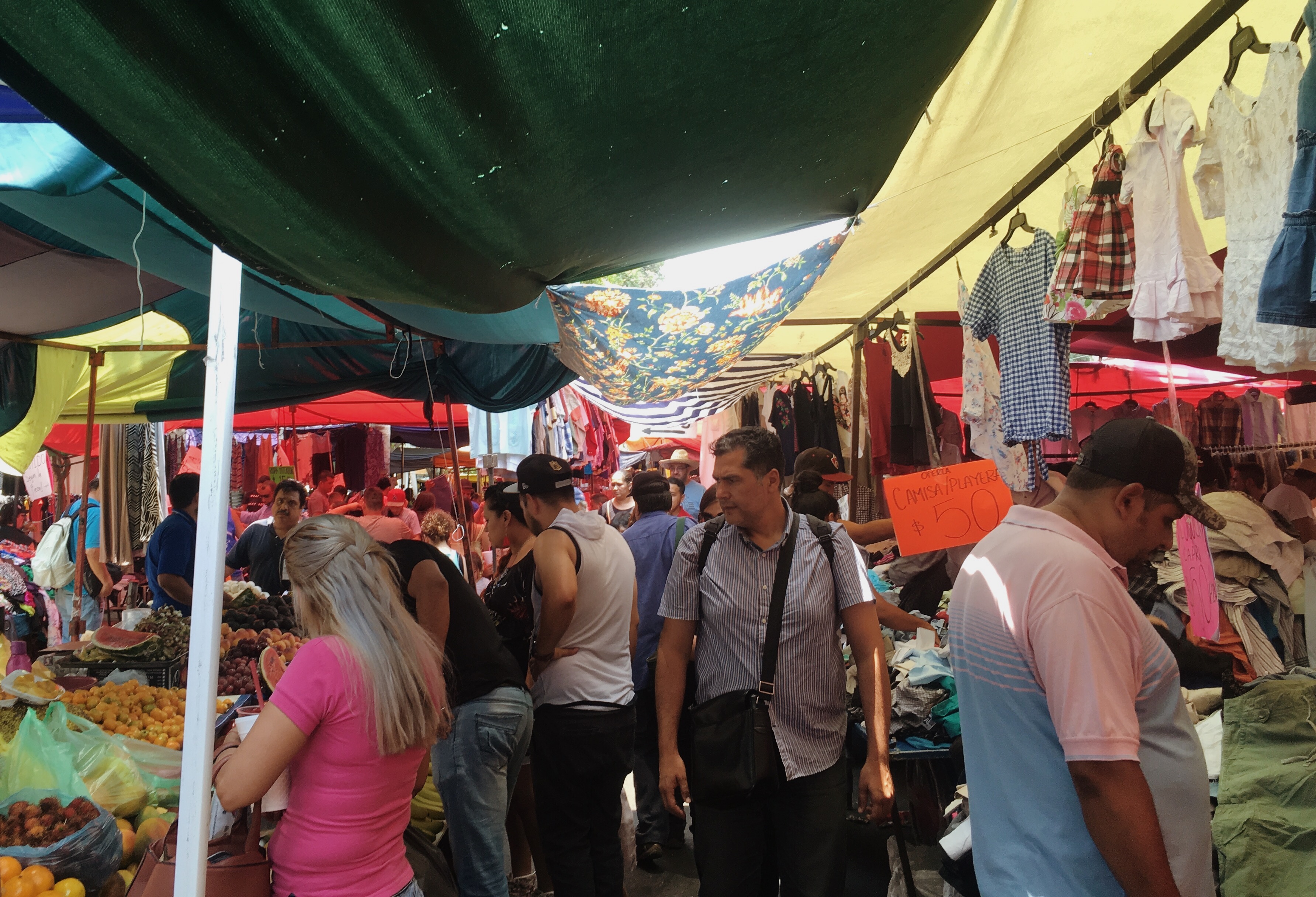
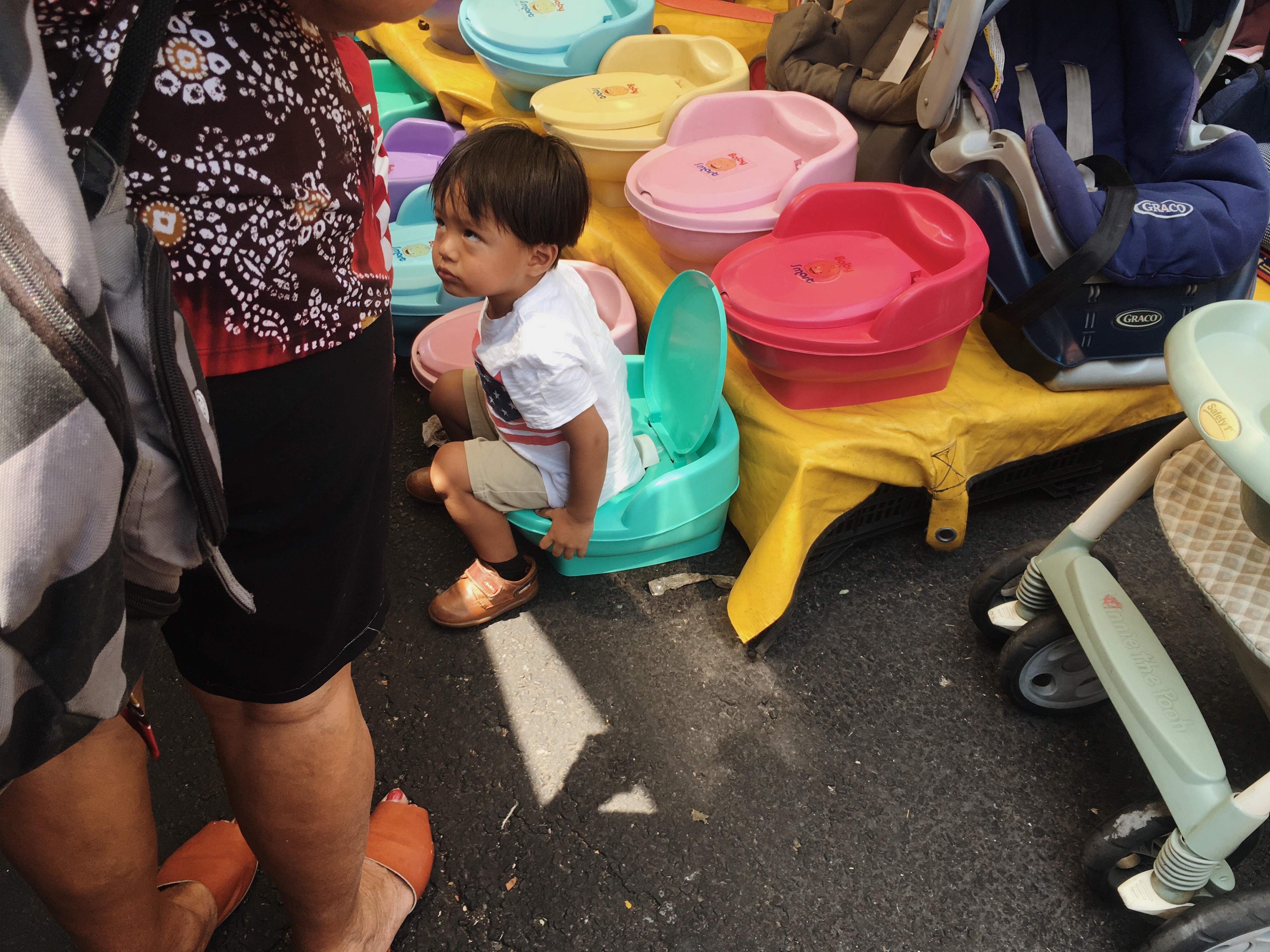
El Baratillo, which roughly translates to “The Cheap,” is one of the biggest tianguis, or public outdoor markets, in Latin America. According to Zona Guadalajara, “El Bara” (as it’s called for short) has 10,000 stalls that take over 50 city blocks. Every Sunday, this massive market takes over roughly eight kilometers spanning the Oblatos, San Felipe de Jesús, El Mirador and Santa María neighborhoods of Guadalajara.
Tianguis is the Náhuatl word for market, and represents a long-standing pre-Hispanic tradition in Mesoamerica. The tianguis was the most important form of commerce in the pre-Hispanic era. In modern-day Mexico, a baratillo market refers to any kind of temporary market that sets up especially on the weekends. And the tianguis does’t serve the mere commercial purpose of buying and selling goods. Tianguis like El Baratillo are also places to gather, hang out, and enjoy a fresh meal at the temporary tables. Getting lost in the labyrinth of puestos (stalls) is my favorite actividad dominguera (Sunday activity). How incredible is it that centuries after the Spanish Conquest, tianguis like the Baratillo market are still thriving?
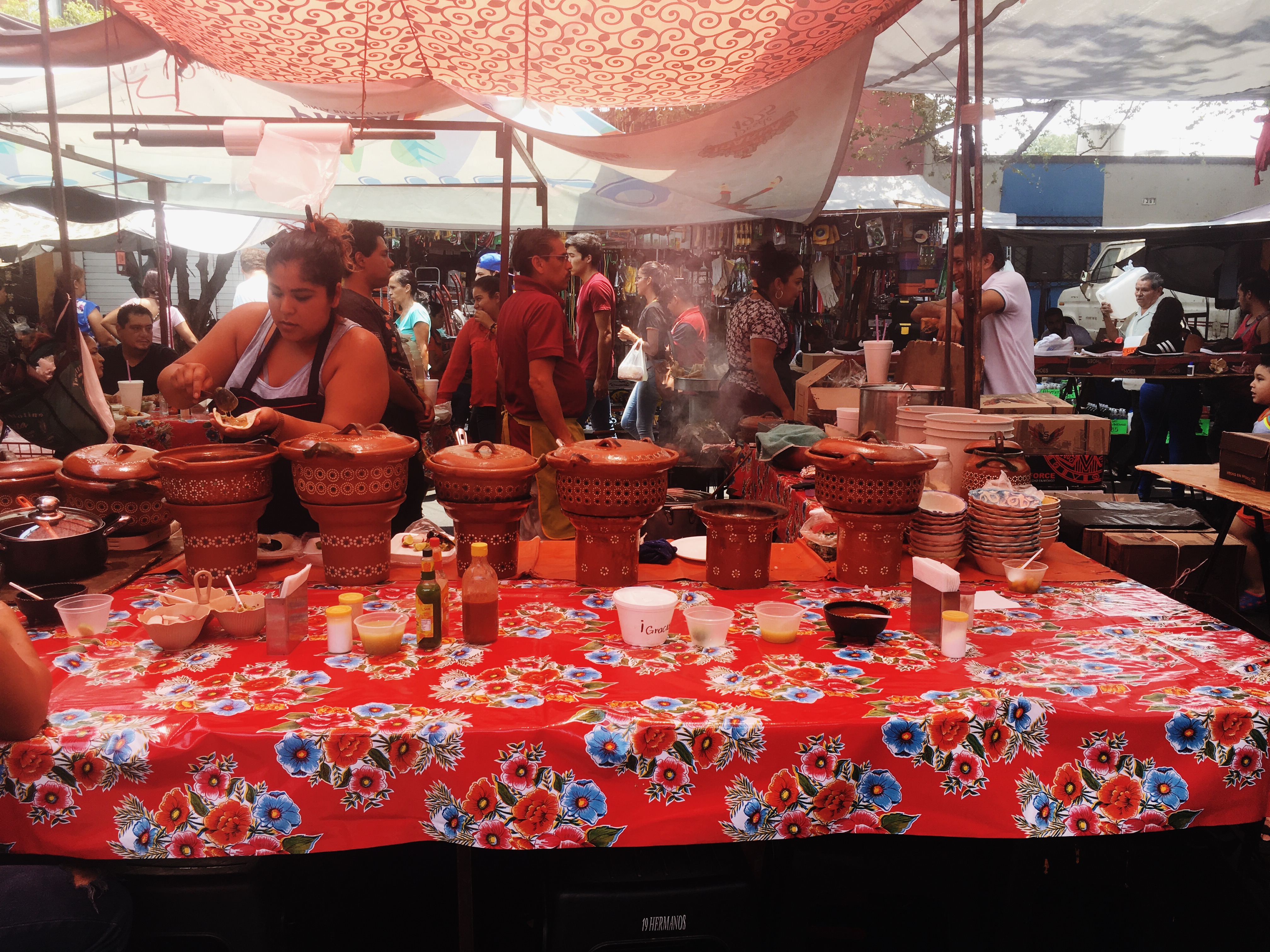
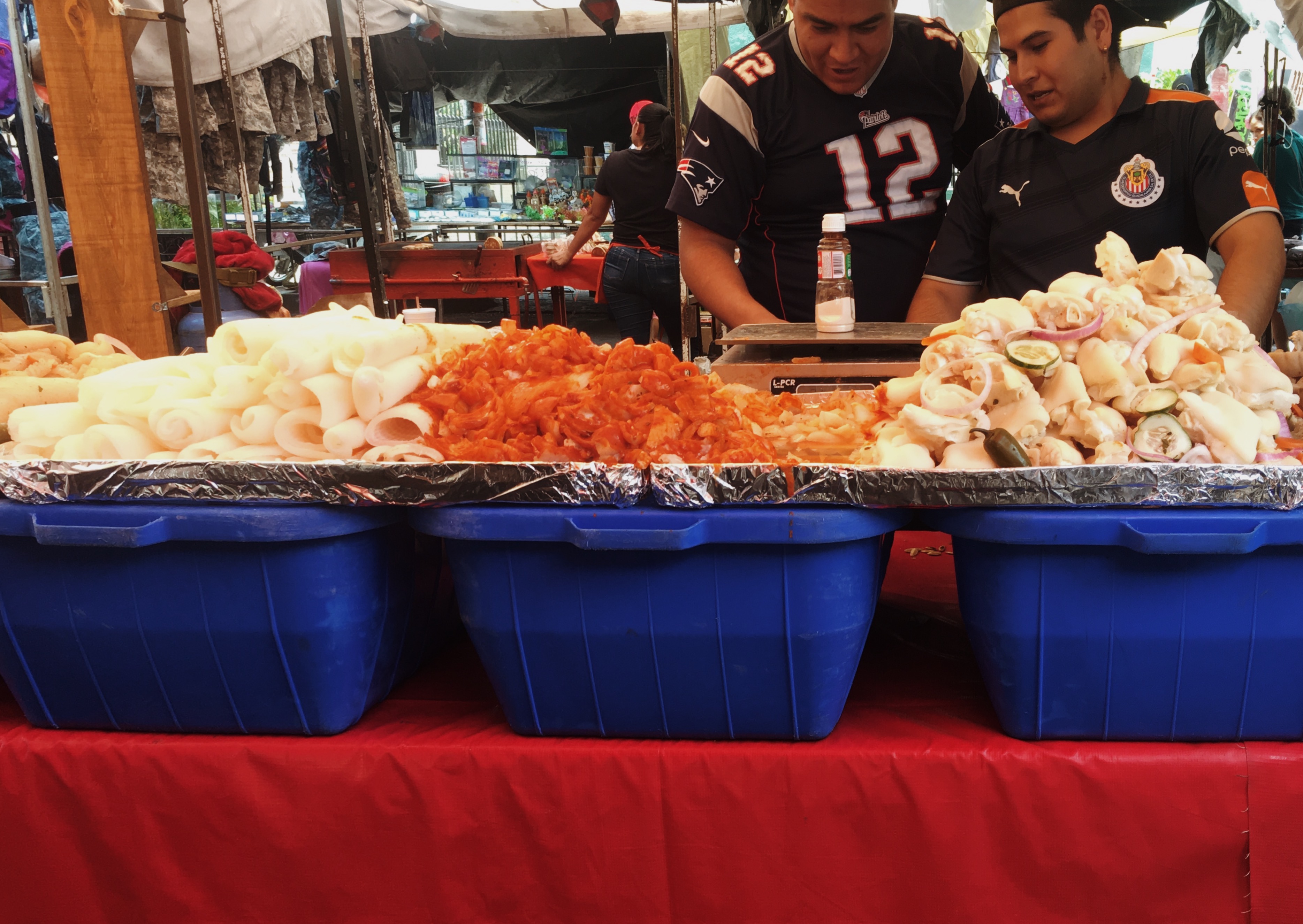
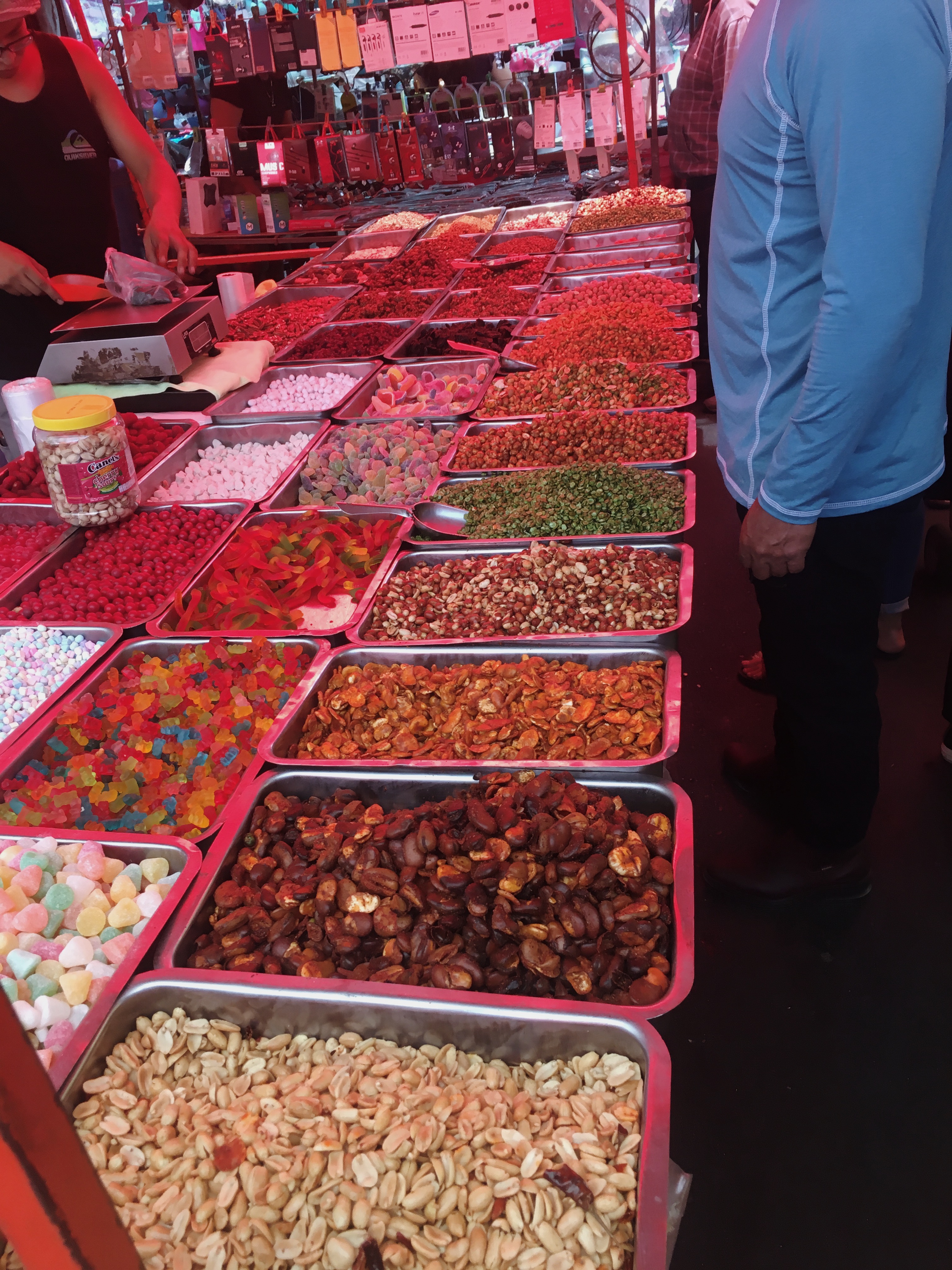
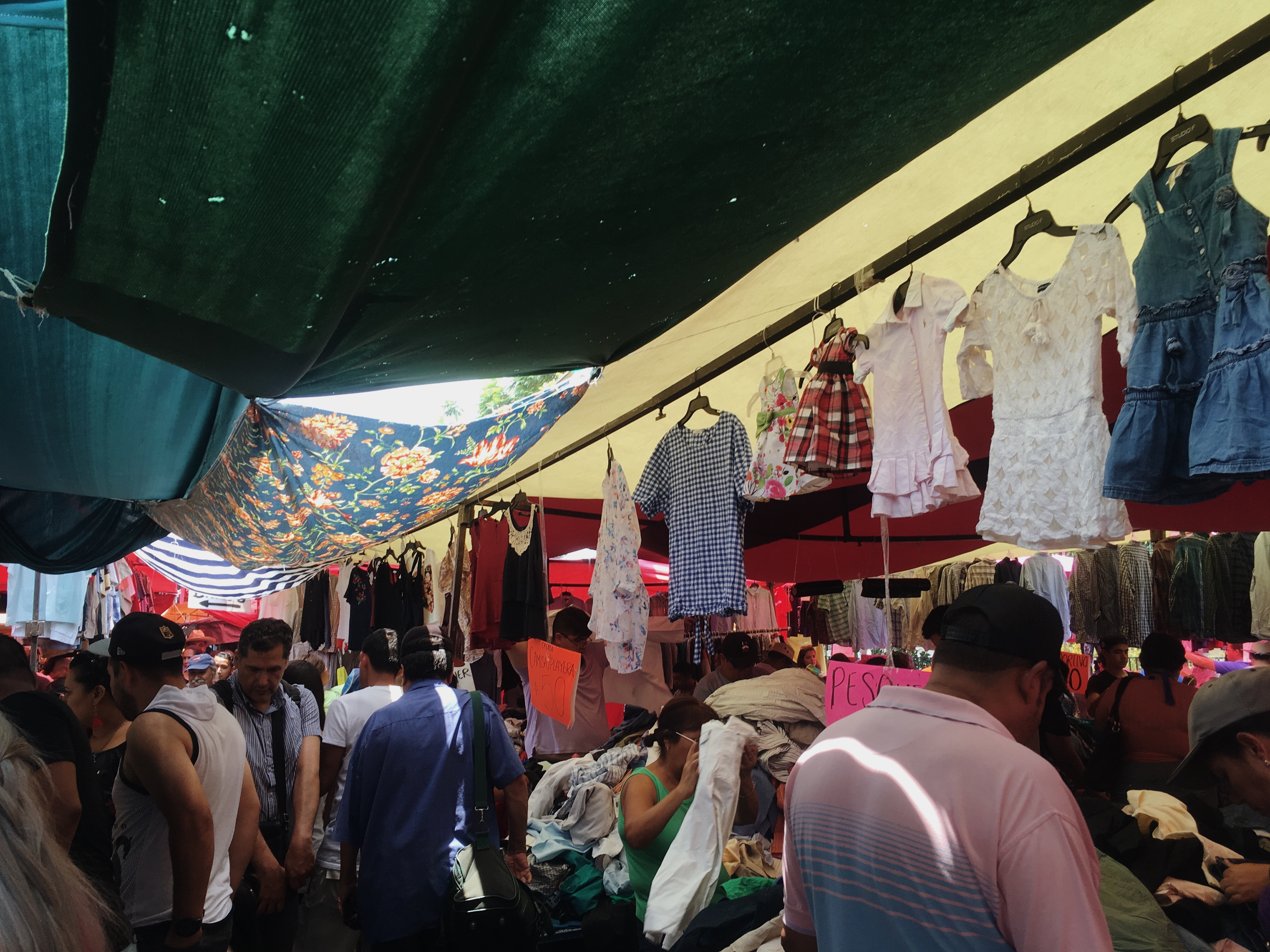
You will never have the same experience twice at El Bara. As Frank explained, “Sometimes, I come to look for something in particular, or just to browse and see what I find. I always find something new.” For example, at one point we were walking through the crowds looking for Buddhist prayer beads, when all of a sudden, we smelled some delicious meat stewing. We decided to follow our noses and were led to an incredible Hidalgo-style barbacoa. This is now one of my favorite style of tacos ever. Had it not been for El Bara, I would have never tried this dish.
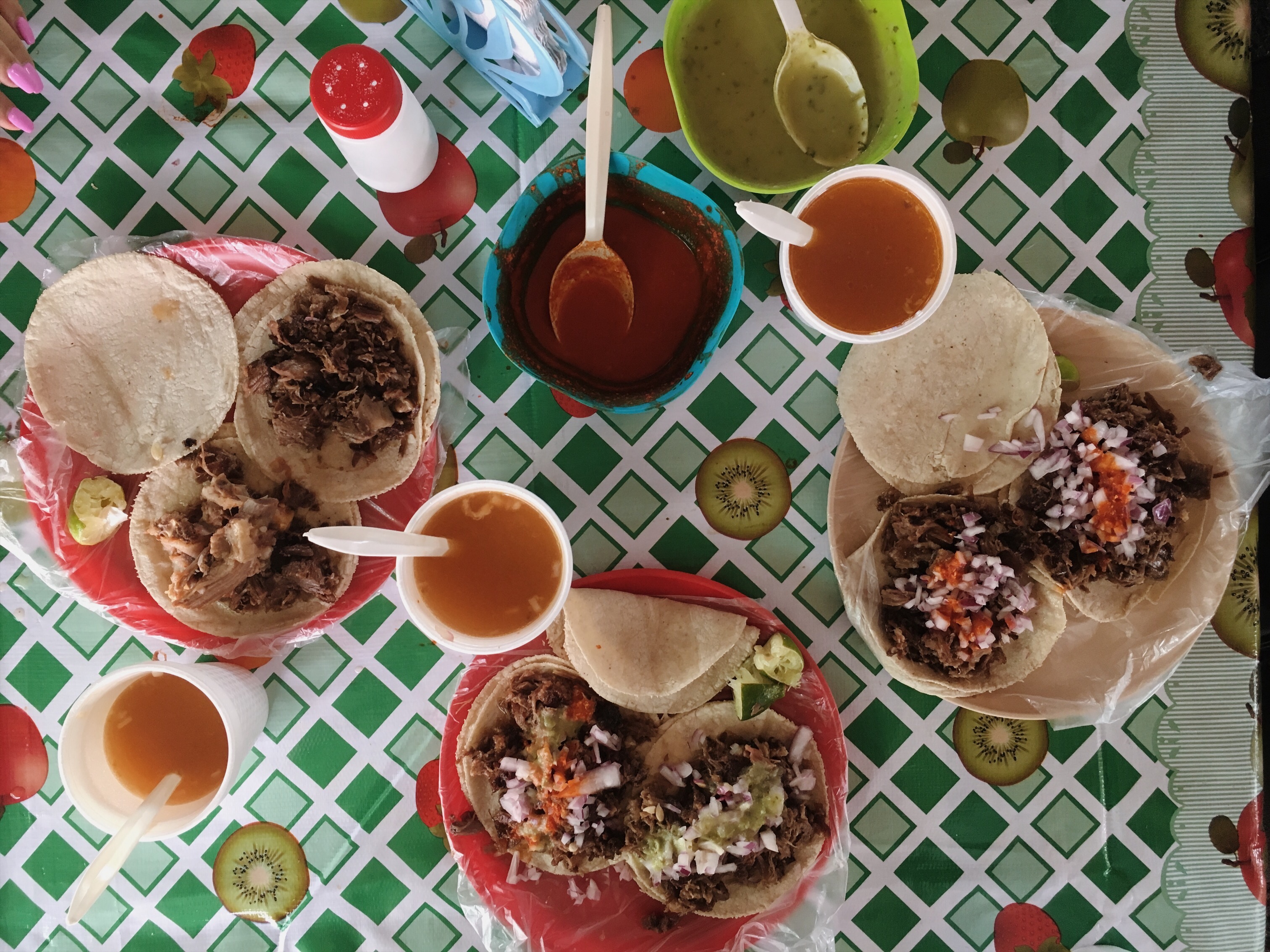
Hidalgo-style barbacoa tacos
Finally, we made our way to our main destination: a pulqueria sets up in the market every Sunday. Pulque is a pre-hispanic alcoholic drink made from fermented sap of the agave/maguey plant. It has a milky-white color and a thick, viscous consistency. The taste is tangy and tart. It’s one of my favorite drinks that I’ve tried in Mexico. Frank and I tried the natural and piñón, pine nut, flavored pulques, while Saggy chose aguamiel, a drink made from the sap of the maguey plant. This was one of the best pulques I had tried in Guadalajara and the highlight of our visit to El Baratillo.
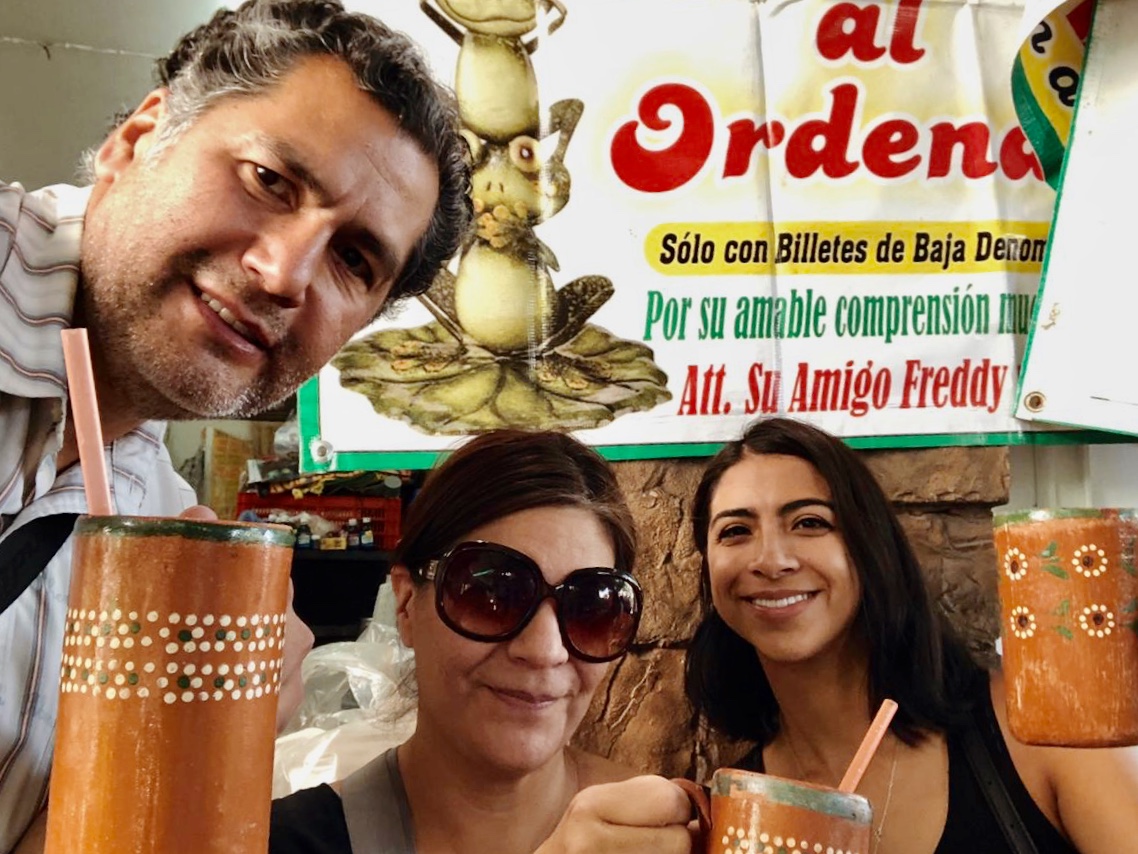
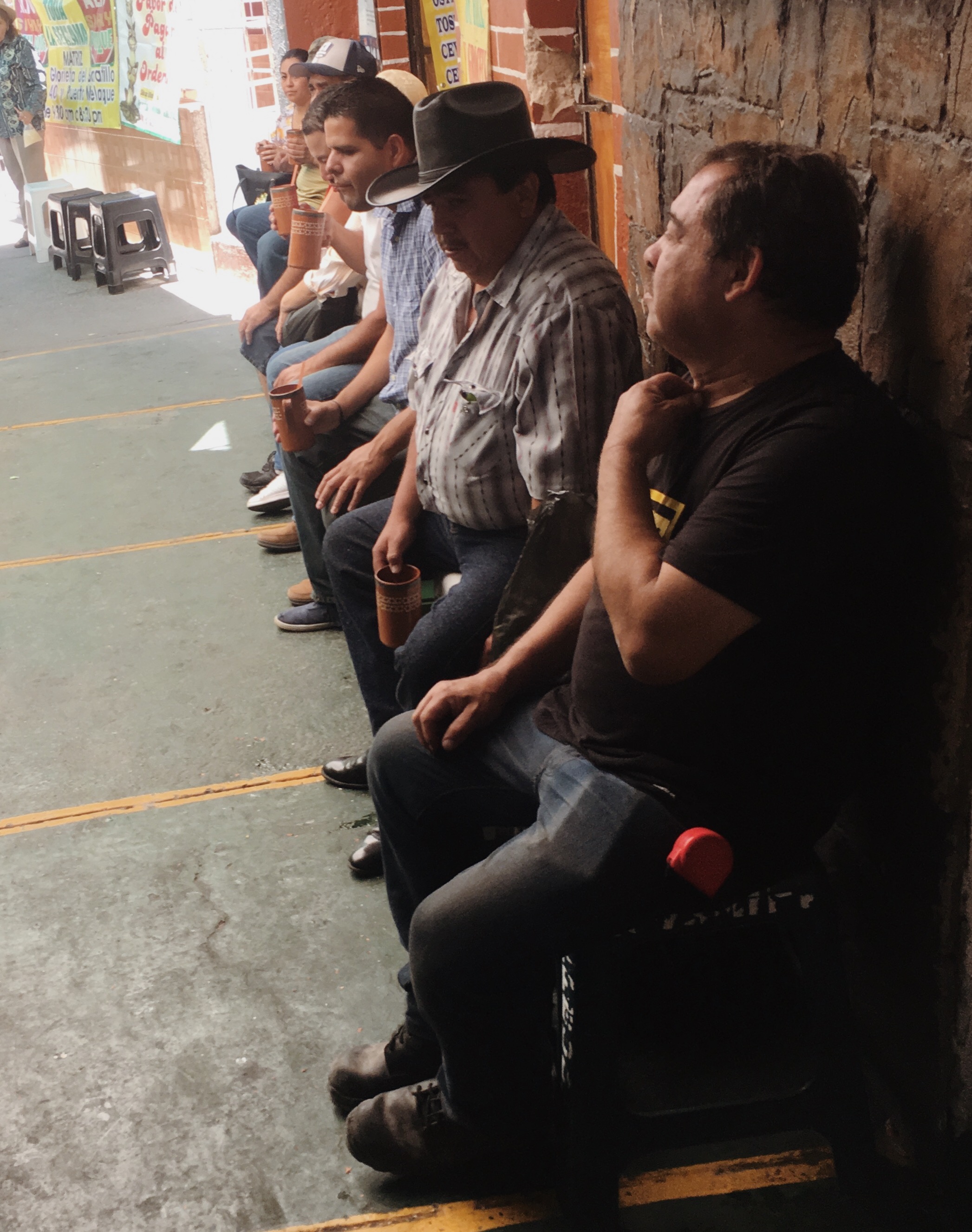
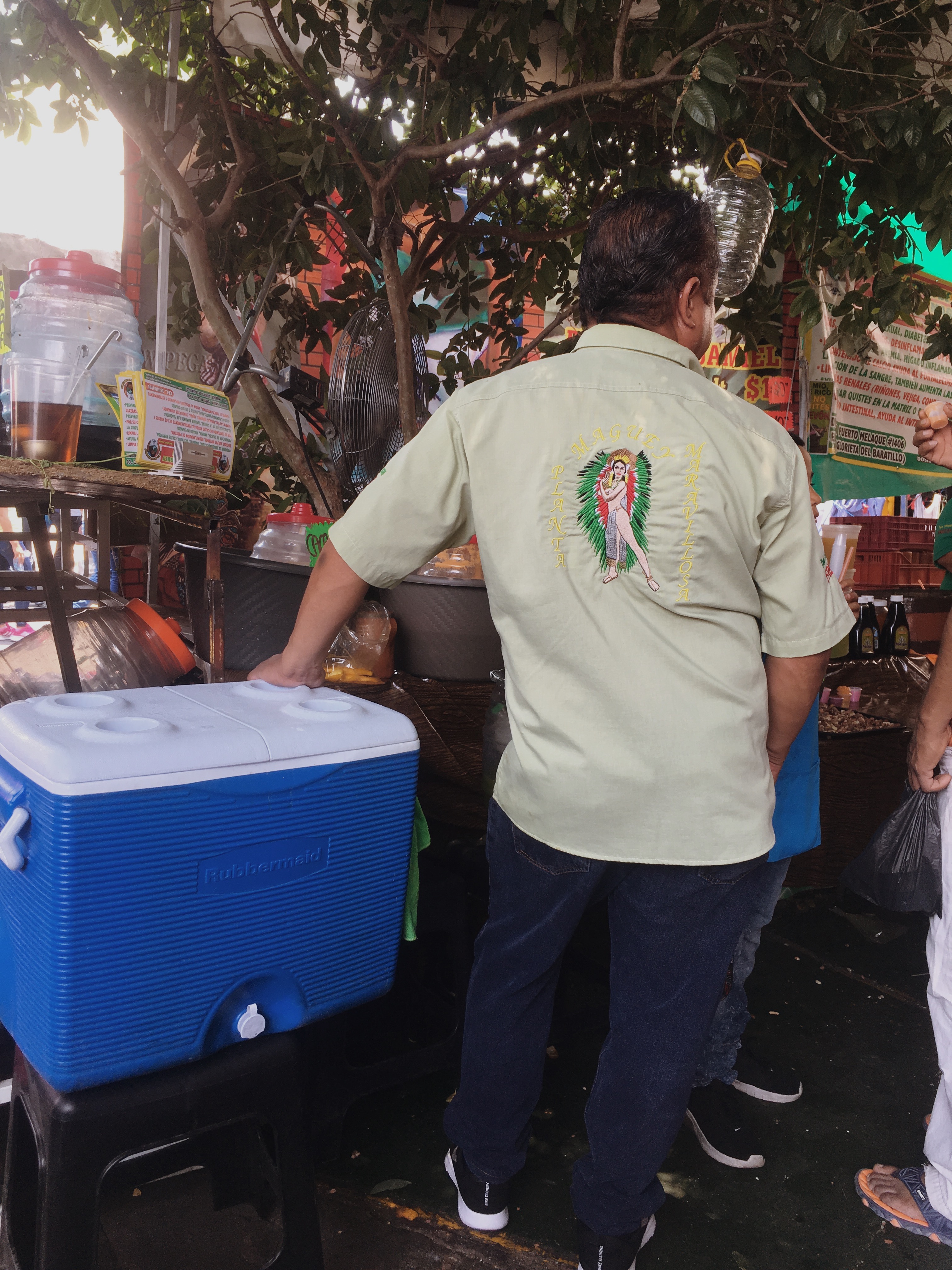
Without a local guide, El Baratillo is easy to miss. “You’re like the Mexican Rick Steves!” my sister told Frank as he told us the history of the market. And while humorous, she has a good point. El Baratillo is one of those local traditions that doesn’t quite reach a tourist audience. No travel guide that I have come across has even mentioned El Baratillo. Without my local guide, Frank, I could have spent years living in Mexico and completely missed this “hidden” gem.
The Expulsion From the Center
A few weeks after my first visit to El Baratillo, I attended a lecture by local architect, David Saracco, on how El Baratillo was expelled from the center of the city. As the unassuming foreigner that I am, I figured that the Baratillo had always taken place where it is today. But after attending this lecture, I learned that the Baratillo used to be an integral part of the city center, and was forced to move.
David explained that the market has been around for at least 250 years and has taken place every Sunday in the center (written records as early as 1776 talk about El Baratillo). Unfortunately, the gente bien (so-called “good people,” the well-off, socialite type) of the 1930s didn’t like to see the Baratillo in the center. They went so far as to describe it as an infection spreading in the center of town. They wanted to hide this market they thought was ugly, where people still sold their things on the floor, from the turistas bien (“good” tourists). They wanted to create a new image and decided the best way to do that was to move the merchants to the outskirts of the city.
The story goes, the authorities grouped together all of the merchants from different baratillo markets from the center and beyond and sent them to Zona Oblatos. For those who don’t know Guadalajara, Zona Oblatos is on the other side of La Calzada, a former river-turned-avenue that now essentially marks the class division of the city. It’s uncommon for people that live in the wealthier side of town to visit “the otherside of La Calzada” because of its supposed unsightliness and real or perceived danger. At the time of Guadalajara’s founding, the otherside was home to the city’s indigenous populations.
Thankfully, this did nothing to diminish the importance of the Baratillo market. In fact, expelling El Baratillo (and other smaller baratillos) from the nicer parts of the city to the barrios populares (working-class neighborhoods), resulted in the formation of one HUGE baratillo market. In the 1960s, the market took up 10 city blocks. Now, almost sixty years later, it comprises over 50.
Tradition versus “Progress”
Visiting El Baratillo means so much more than a day of shopping for me. El Baratillo represents a centuries-old indigenous tradition that has survived colonization and modernization. In an era of progress at any cost, it gives me hope to see traditions like the tianguis thrive.
I remember talking about the importance of economic development in my International Relations classes at university. Like the gente bien of Guadalajara, we emphasized the importance of developing economies, like Mexico’s, need to modernize, formalize, and progress. But after living in Mexico, my perspective changed and my learned ideas about modernization have crumbled. I cannot disagree more with “advancement” at the expense of cultural traditions — like El Baratillo.
What kind of progress would that give us? More Walmarts? Sorianas? Amazons? At what expense? At the expense of destroying centuries-old traditions. At the expense of the small entrepreneurs with their handcrafted artwork. At the expense of street vendors gracing us with their family recipes. At the expense of everyday people just trying to get by. That’s not the kind of world I want to live in.
El Baratillo is one of the most singular and under-appreciated aspects of the city. So I’ll continue to frequent El Baratillo for my favorite pulque, delicious tacos, and other shopping needs. There is a thriving, centuries-old second-hand economy that can be found in the streets of Mexico, and I hope that never changes.
Additional Sources:
Saracco Álvarez David Alejandro (2019). La expulsión del baratillo del centro de Guadalajara. Museo de la Ciudad, Guadalajara, Jalisco.
El Informador. “Roña que cunde” en El Informador (8 de Abril 1937)
Doñan, J.J. Hasta La Calzada. Revista Territorio, 16th Edition. http://www.revistaterritorio.mx/hasta-la-calzada.html?fbclid=IwAR0zC0hNUGlXoLvIjKO_7mX5exPU8AV5Yl-rUmYFD5_pQ4imT35KPDWWI_U


 Melissa Montalvo
Leave a reply to Lori Cancel reply